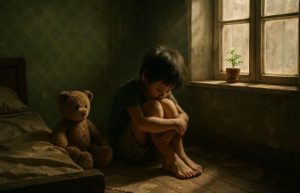
You Hold the Pen Now
—from Grandpa Eli
There comes a moment in every wounded life when the past begins to blur, not because the pain has faded, but because the mind grows weary of replaying the same unanswered questions.
For many, childhood was not a place of safety but a season of survival. The home, which should have been a shelter, became a battlefield. Affection was conditional. Praise was rare. Silence was heavy. And love, if it existed at all, came at a price—obedience, perfection, invisibility.
As children, we adjusted. We learned to read the room before we read books. We became skilled in the art of shrinking—our voices, our needs, our very selves—because smallness, we were told without words, was safer.
These lessons sink deep.
Even as adults, we carry them. They follow us into relationships, into workplaces, into the private chambers of our self-worth. We perform rather than connect. We apologize for taking up space. We mistrust joy. We fear softness. We question our right to be loved without earning it.
And yet, despite all of it, there remains a truth that waits patiently for our permission to rise.
We did not write the beginning. But we hold the pen now.
This is where the narrative begins to shift.
The pain of the past is not invalidated by this truth. Rather, it is honored. What happened mattered. What was missing mattered. But if we are to grow—if we are to live instead of merely survive—we must recognize that healing is not about erasing the story; it is about reclaiming authorship.
Letting go of blame is not denial. It is a declaration of freedom.
We are no longer confined to the margins written by those who misunderstood us, feared us, or failed to love us. We are not bound to repeat the cycles they couldn’t break. We are not forever cast as the fragile character in someone else’s unfinished script.
To hold the pen is to begin again—not because we forget the past, but because we refuse to let it define what comes next.
Growth may be quiet. It may look like saying “no” without guilt. It may look like resting when your childhood told you rest was laziness. It may look like speaking kindly to the mirror, rewriting the language your parents never learned.
It may begin slowly. But it begins with you.
You hold the pen now.
Write with courage. Write with compassion. Write the story you needed as a child—and still deserve as an adult.
And above all, write like your life depends on it.
Because in many ways, it does.