I Tucked Her In at Night: A Story of Childhood Role Reversal

“I Tucked Her In at Night”

From: A child who had to parent their own parent

Dear Grandpa Eli,

I don’t really remember being little.

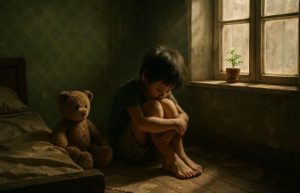
I mean, I know I was — there are pictures of me in footie pajamas, holding a stuffed bear with one eye. But even then, I remember watching over Mom. Making sure she didn’t cry too long. Or sleep too long. Or drink too much.

Other kids got tucked in at night.
But I was the one doing the tucking.

I’d help her to bed after she passed out on the couch. I’d take off her shoes, pull a blanket over her shoulders. Once, I even sang her a lullaby. I was five.

People say kids are resilient. But I think sometimes we’re just… good at hiding.
Good at pretending we’re not scared.
Good at smiling for teachers and saying, “I’m fine,” when no one packed our lunch again.

Every morning before school, I checked to see if she was breathing. That was my routine. That — and pouring cereal with water because the milk was gone.

When other kids asked what my mom did for work, I made things up. “She’s a nurse,” I said once. She wasn’t. She didn’t leave the house for days. Except to buy wine.

When she was sober, she could be magic.
She’d braid my hair and call me “her little sunshine.”
But when the bottle came out, the sunshine disappeared.

Sometimes she’d cry and say, “You’re the only thing keeping me going.”
I didn’t know if that was supposed to be a compliment.
It felt like a cage.

One time, I told the school counselor that I felt tired all the time. She said maybe I needed to sleep more. I wanted to say:
“I sleep just fine. It’s waking up to this that’s exhausting.”

But I didn’t.
Because if someone found out, I was afraid they’d take me away.
And as broken as Mom was… she was still mine.

Now I’m twelve. I still flinch when someone knocks on the door.
I still freeze when someone yells.
I still feel guilty when I rest — like I should be checking on someone, fixing something, apologizing for something I didn’t even do.

Grandpa Eli,
Is it okay if I say I’m tired?
Even if I don’t look like it on the outside?

Is it okay to be a kid…
Even if I never learned how?

Sometimes I look in the mirror and try to see me — just me — not the caretaker. Not the peacekeeper. Not the one keeping everyone from falling apart.

Do you think she ever saw me?

Do you?


Reply from Grandpa Eli

Oh my precious one,

I see you.

I see the five-year-old with tiny hands pulling blankets over a grown woman. I see the tired eyes behind the “I’m fine.” I see the strength it took to become a parent before you even lost your baby teeth.

And yes — I see you. Not the caretaker. Not the peacemaker.
You. The child who deserved to be held, not to be holding everything together.

Sweetheart, what happened to you was not okay.

You should never have had to carry so much. You should have been the one being sung to, not the one whispering lullabies to a woman drowning in her pain. You should have been eating warm dinners, not cereal with water. You should have had one job: to be a child.

But instead, you were handed a silent contract — to become her hope, her helper, her emotional anchor. And no one asked if your tiny heart could carry all that weight.

You asked if it’s okay to be tired.
Let me be the one to give you the answer your soul has waited years to hear:

Yes. It is okay to be tired.
It is okay to rest.
It is okay to cry.
It is okay to not be okay.

You don’t have to earn rest. You don’t have to apologize for your exhaustion. You don’t have to stay in “alert mode” just because love once depended on it.

You are allowed to lay down the weight.

And you know what else?

You don’t have to save anyone to be worthy of being saved.

I want you to hear this: You were never meant to be her solution.
That was never your job. Not then. Not now.

You’re twelve, and yet you speak like someone who’s lived a hundred years. But buried beneath that armor is still a child. A child who wants to laugh freely. To play. To mess up without fear. To eat cereal with milk and not count every drop.

That child still lives inside you — and they’re waiting.

Let them out, bit by bit. Let them be loud. Let them rest. Let them be seen.
Because I see them. And I love them. Just as they are.

You are not invisible to me.
You are unforgettable.

And I am so, so proud of you.

With the gentlest arms and the warmest lap,
— Grandpa Eli
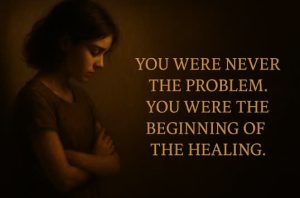
The Day You Finally Said ‘Enough’

Keyword focus: break the cycle of abuse, take back your life

The Day You Finally Said ‘Enough’

There is a moment. It doesn’t always come with thunder or fanfare. Sometimes, it comes quietly—while brushing your teeth, folding laundry, or watching a stranger hold their child with tenderness you never received.

It comes like a whisper, but it roars through your chest.

“I can’t live like this anymore.”

That moment, dear one, is sacred. It’s the beginning of everything.

You stood up for yourself. Or set a boundary. Or made a call to a therapist. Or simply cried for the very first time for the child you used to be.

You Were Never Meant to Stay Silent Forever

For years, maybe decades, you lived in survival mode. You swallowed your voice. You minimized your pain. You convinced yourself it wasn’t that bad—or that maybe it was but there was nothing to be done.

You endured. You adapted. You wore masks and armor. You did what you had to do to make it through.

But inside, a quiet knowing always waited: This is not the life I was born for.

And one day, that knowing rose up.

You stood up for yourself. Or set a boundary. Or made a call to a therapist. Or simply cried for the very first time for the child you used to be.

That was the day you said: Enough.

Enough of the Shame

You decided you were tired of carrying shame that was never yours to begin with. Shame for being too sensitive. For not being “strong enough.” For what they did to you.

But none of that belongs to you.

That day, you said:

  • “I am not to blame.”
  • “I don’t need to keep proving my worth.”
  • “I’m allowed to exist exactly as I am.”

Enough of the Old Scripts

You saw how the past kept repeating itself. Maybe in your relationships. Maybe in the way you talked to yourself. Maybe in the way you disappeared to keep the peace.

But that day, you decided: The cycle stops with me.

You chose something different. Maybe not perfectly. Maybe not all at once. But you chose.

The Power of a Quiet Revolution

Not every rebellion is loud. Some begin with a whisper: “I matter.” Some begin with rest, with softness, with letting someone in. Some begin with choosing to believe you are lovable, even when everything in your past said otherwise.

That’s a revolution.

You started rewriting your life.

It Was Never Too Late

Maybe you were 17. Maybe you were 47. Maybe you were 72.

But the moment you said “enough,” your healing began.

You stopped waiting for someone else to save you. You became your own rescue.

You picked up the pen and reclaimed authorship of your story.

And no matter what came before, that is the chapter that changes everything.

Today Is Always a Good Day to Begin Again

If you haven’t had your “enough” moment yet, let this be it. Let this be the day you:

  • Set a boundary.
  • Say no.
  • Say yes.
  • Cry.
  • Begin.

The life you want is already reaching for you. The child you once were is cheering you on. The person you’re becoming is already proud.

Say it now: “Enough. I choose me.”


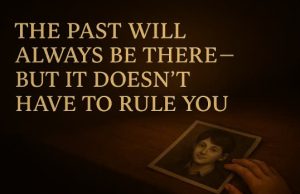
The Past Will Always Be There But It Doesn’t Have to Rule You

Keyword focus: overcoming childhood trauma, does trauma define you

. No matter how far we run, no matter how much we grow, the past finds ways to whisper.
No matter how far we run, no matter how much we grow, the past finds ways to whisper.

The Past Will Always Be There—But It Doesn’t Have to Rule You

There are some stories in life that never fade. Some memories that live just under the skin. No matter how far we run, no matter how much we grow, the past finds ways to whisper.

But here’s what I want to tell you, my dear: it doesn’t have to rule you.

The Shadow That Lingers

You may have worked hard to build a life—maybe a family, a job, a home. On the outside, it might even look like you’ve moved on. But inside, a part of you still flinches. You still second-guess yourself. You still carry echoes of old fear.

Because trauma doesn’t obey time. And the past doesn’t stay in the past just because the calendar changed.

The truth is: your past shaped you. But it does not get to write the ending.

The Wounds That Speak in Silence

For many survivors of a difficult childhood, the past doesn’t scream. It whispers:

  • “You’re not good enough.”
  • “You’re too much.”
  • “You always mess it up.”

These aren’t your true voice—they’re the internalized voices of those who hurt you. But when they go unchallenged, they become the story you believe.

The Turning Point: When You Decide to Reclaim Power

There comes a moment—sometimes quietly, sometimes in crisis—when you realize: I don’t want to be ruled by this anymore.

That moment is everything. It doesn’t mean the pain is gone. It means you’ve chosen to stop letting it lead the way.

From here, healing can truly begin.

You Can Hold the Past Without Letting It Steer the Present

You can remember without reliving. You can honor your younger self without letting fear control your decisions. You can carry your story—and still choose peace.

The key is recognizing that your past is part of you, but not all of you.

How to Stop Letting the Past Rule

  • Name the triggers. What people, words, or situations bring old pain back to life?
  • Befriend your inner child. Talk to them. Reassure them. They’re still listening.
  • Choose new responses. What once was instinct for survival can now be replaced with conscious choice.
  • Surround yourself with safe people. Healing doesn’t happen in isolation.

Each choice is a vote for the life you want, not the one you were handed.

You Are the Author Now

Your past was written without your consent. But your future? That’s in your hands.

And with every small act of love, truth, and courage—you are editing the story.

You are not your wounds. You are the one who lived through them.

What They Did Wasn’t Your Fault – And It Never Was

Keyword focus: self-blame childhood trauma, forgiving yourself for the past

What They Did Wasn’t Your Fault—And It Never Was

Some wounds don’t scream. They whisper.

They whisper that maybe it was you. That you should have been quieter. Smarter. Better behaved. More lovable. They whisper until the echo becomes a belief: It happened because of me.

Let me say this with all the clarity an old soul can muster:

What they did to you was not your fault. And it never was.

The Lie Children Tell Themselves

When something terrible happens to a child, the world becomes unsafe—and children, eager to make sense of chaos, often come to the same heartbreaking conclusion: “It must be me.”

Why? Because it’s safer to believe you were the problem than to believe the people who were supposed to love you didn’t.

This belief becomes a scar deep in the psyche. And long after the bruises fade, the shame remains. It leaks into relationships, career choices, the way we talk to ourselves in the quiet moments.

Guilt and Shame: The Silent Twins

Guilt says, “I did something bad.” Shame says, “I am something bad.”

Many survivors of childhood trauma carry both.

They feel guilty for being “difficult children.” They feel shame for needing, for crying, for surviving. For being the ones who walked away but never quite felt free.

But here’s the truth: children cannot cause abuse. They cannot provoke neglect. They cannot deserve abandonment.

They can only react to what they are given. And no matter how they reacted, it was not a justification for mistreatment.

The Power of Rewriting the Story

You don’t get to rewrite the past, but you do get to rewrite what you believe about it.

You get to say:

  • “I was a child.”
  • “I didn’t cause this.”
  • “They were wrong.”
  • “I still matter.”

And yes, sometimes that truth is met with resistance. The part of you that still clings to self-blame might push back. That’s okay. You’re unlearning something you were taught in survival mode.

Forgiving the Child You Were

This isn’t about forgiving abusers. This is about forgiving yourself.

Forgive yourself for:

  • The ways you coped.
  • The things you didn’t understand.
  • The silence you kept.
  • The times you lashed out or shut down.

You did the best you could. And that child you were? They were brave in ways no one ever recognized.

You survived.

Healing Starts With the Truth

And the truth is this: you were innocent. You were worthy of love. And you still are.

The moment you stop blaming yourself is the moment you take your power back.

So today, when that old voice starts whispering again—tell it gently but firmly:

“I know better now. That was never my fault.”

You Were Never Meant to Carry This Alone

Keyword focus: healing from childhood trauma, inner child healing

You Were Never Meant to Carry This Alone

There are certain wounds that don’t bleed, but they live inside us. They sit silently in the back of our minds, shaping the way we see ourselves and the world around us. And often, they begin when we are too small to understand, too vulnerable to fight back, too young to even know it’s not normal. This is what it means to carry the burden of childhood trauma.

If no one told you this before, let me tell you now: you were never meant to carry this alone.

There are certain wounds that don’t bleed, but they live inside us.

A Backpack of Stones

Imagine a small child with a backpack. And every time someone yelled, ignored, insulted, shamed, or abandoned them, a stone was placed in that pack. At first it was just a few. Then more. Then even more. Until one day, the child could barely stand. But they kep

But it was. And it still is.

Because trauma that isn’t healed, doesn’t go away. It grows roots in our nervous system. It whispers in our relationships. It controls how we love, trust, speak, and even how we see ourselves in the mirror.

The Myth of Self-Reliance

Many people who grew up in pain learned to be strong too soon. They became their own protectors. They learned how to read a room in seconds. How to shrink, how to disappear, how to keep the peace.

But strength forged in fear is not peace. And independence built on survival is not freedom.

You may think you’re supposed to figure it out on your own. That you have no right to complain. That it’s too late to change anything now.

But none of that is true.

Healing Begins When We Speak the Unspoken

One of the most powerful steps in healing from childhood trauma is breaking the silence. Speaking the truth of what happened to you. Even if it’s just whispered into a journal. Even if your voice shakes. Even if you’re afraid it makes you weak.

It doesn’t make you weak. It makes you human.

Because the pain that is hidden cannot be healed. The shame that is buried will continue to rot. But the moment you let light in, even a little, the healing begins.

You may need to grieve. You may feel angry. You may feel sad about the childhood you deserved but never got. All of that is valid.

You Were Not Meant to Heal Alone

It’s a beautiful, radical thing to let someone in.

Whether it’s a therapist, a friend, a support group, or even words in a book that understand your pain—you begin to remember that you were never supposed to walk through this in isolation.

Healing is not a solo journey. It is a communal act of remembering, of witnessing, of holding one another when the weight becomes too much.

Your inner child still lives within you. And they don’t need you to be perfect. They just need you to show up, hold their hand, and promise, “We are not alone anymore.”

A Future Not Defined by the Past

You are not broken. You are someone who learned how to survive. You built walls to protect yourself. You carried weight that was never yours. And you made it here.

But survival is not the same as living.

Now, you are allowed to put the backpack down. Slowly. Gently. You are allowed to say, “I deserve softness.” You are allowed to feel joy without guilt. Love without fear. Rest without shame.

You were never meant to carry this alone. And now, you don’t have to.

Let this be the first step. Or the fiftieth. Let this be your reminder: healing from childhood trauma is possible. And your inner child is still waiting for you—not to rescue them, but to sit beside them and say, “We made it. And we’re safe now.”

This Ends With Me – Becoming the Cycle Breaker Your Family Never Had

Keywords: generational trauma, breaking the cycle, parenting after trauma, conscious parenting, emotional resilience

Somewhere, someone has to say it: “This ends with me.”

The yelling. The silent treatment. The fear in small footsteps. The shame tangled into bedtime.

It traveled through generations, passed down like a cruel inheritance. But here you are—tired, tender, trembling—and choosing differently.

You, my dear, are the cycle breaker. And though it may be the hardest role in the family… it is also the most sacred.

  1. What the Cycle Looks Like

Maybe you grew up walking on eggshells. Maybe you were never hugged. Maybe you only felt noticed when you were achieving—or when you failed.

And now, as a parent, partner, or even just a grown-up looking back… you see the patterns. The same wounds trying to make a home in you. The same voices now echoing in your own.

But you noticed. And that awareness? That’s where the break begins.

  1. Why It’s So Hard to Break Free

The pain we lived in childhood becomes our blueprint. Even when we hated it. Even when we swore we’d never repeat it.

Stress hits… and suddenly, we hear our parents in our voice. We withdraw, we raise our voices, we freeze. And afterward, the guilt eats us alive.

But here’s what I want you to hear:

You are not failing. You are interrupting. And interruptions are messy.

  1. Choosing to Parent Differently

Cycle breaking doesn’t mean perfect parenting. It means conscious parenting.

It means:

  • Apologizing when you mess up.
  • Letting your child say “no” and still be safe.
  • Saying “I love you” even when you’re angry.
  • Allowing space for big feelings—not punishing them.

It’s giving your child what you never had. And giving yourself what you always needed.

  1. Healing While You Lead

Many cycle breakers are still bleeding. Still triggered. Still afraid of becoming “just like them.”

So let me remind you: You don’t have to be fully healed to start healing the future. You just have to be willing.

Take breaks. Cry in the laundry room if you have to. But keep choosing:

  • Therapy.
  • Journaling.
  • Saying, “This isn’t how it has to be.”

Every tiny choice to respond instead of react is rebellion. Every hug you give is a revolution.

  1. Reparenting Yourself Along the Way

As you parent your children, or simply grow into your truest self, you may find parts of you still stuck in the past.

A scared child still bracing for criticism. An angry teen still trying to be seen. A broken soul still aching for approval.

Love them. Speak to them gently. Say:

  • “You didn’t deserve that.”
  • “I see you now.”
  • “We’re doing it differently.”

Because cycle breaking doesn’t just heal forward—it heals backward too.

  1. What Legacy Really Means

Legacy isn’t the wealth you leave. It’s the warmth.

It’s your child saying, “I feel safe.” It’s your partner feeling seen instead of shamed. It’s you… waking up one day, realizing the voices in your head have grown quieter.

You are not weak for wanting better. You are strong for choosing better with shaking hands.

Closing Words from Grandpa Eli

My dear one, You are the first light after a long line of storms. You are the soft voice where there used to be screams. You are the one who chose not to pass the pain forward.

You are the cycle breaker. And because of you, everything can change.

💬 If you’re walking this road—leave a 🌱 in the comments. Let the others know: we’re not doing this alone. #CycleBreaker #BreakTheChain #ConsciousParenting #GenerationalHealing #ThisEndsWithMe

Tom Thought He Was Over It – Until the Silence Started Screaming

Tom always said he was fine.

He had a stable job. A wife who loved him. Two kids who climbed into his lap every evening.
His life looked “normal.”
He even laughed loud at dinner parties.

But no one saw the way his hands clenched every time someone raised their voice.
No one saw how he flinched—just slightly—when his son cried too hard.

No one knew about the dreams.
The ones where he was eight again. Standing in that hallway.
Hearing footsteps.
Holding his breath.
Waiting for the door to slam.

The Past Was Supposed to Be Gone

Tom was thirty-eight.
He had survived.

He told himself:

“What happened is over.”
“I’m not a child anymore.”
“I don’t need to talk about it.”

So he didn’t.
Not when his therapist gently asked.
Not when his wife noticed he pulled away during arguments.
Not even when his son asked,

“Dad… were you ever scared when you were little?”

Tom smiled.
Changed the subject.
Laughed it off.

But inside—
the silence screamed.

What You Hide, Doesn’t Heal. It Festers.

There was no one big moment that broke him.
It was the little things. The nothing moments. The quiet.

  • When his daughter spilled her milk and braced for yelling. 
  • When a friend said “You’re just like your dad,” and Tom’s stomach twisted. 
  • When he caught himself zoning out during a bedtime story, staring at the wall… lost in a memory he thought he had buried. 

That’s the thing about trauma.
You don’t bury it.
You carry it.
In your body. In your tone. In your silence.

And one day, Tom sat in his car outside his house, keys still in the ignition—
and whispered out loud for the first time:

“I’m not okay.”

The Breaking Wasn’t the End. It Was the Beginning.

That whisper changed everything.

He didn’t call it healing at first.
He just started talking to someone.
He wrote letters to the boy he used to be.

He stopped pretending.

He started telling the truth.

“You can’t heal what you hide.”
And maybe the bravest thing Tom ever did
wasn’t surviving what happened—
but choosing to face it.

He didn’t do it alone.
And you don’t have to either.

If you’ve been carrying something like Tom…

If there’s a memory you never talk about,
a silence that still aches,
a younger version of you still waiting to be held—

Please,
don’t wait another year.
Don’t wait until it explodes.
Don’t wait until it bleeds into your children, your marriage, your dreams.

The past shaped you.
But it doesn’t get to control your future.
Not anymore.

Healing is possible.
Not by pretending.
But by remembering—
with kindness.
With support.
With people who see you.

You’re not broken.
You’re hurting.
And hurt can heal—when it’s no longer hidden.

🕯️
This one’s for Tom.
And for every child still hiding inside an adult who’s trying to keep it all together.