Introduction:
There was a box in the attic labeled “Junk – Don’t Need.”
Inside it were expired coupons, old bills, and—at the very bottom—Lila’s childhood report cards.
Every grade was there.
Every teacher comment.
Every “Excellent work!” and “Pleasure to have in class.”
But one thing was missing from every single page:
Her name.
No “Lila.”
No “Evans.”
No trace of the child who had earned those grades with tears, silence, and invisible strength.
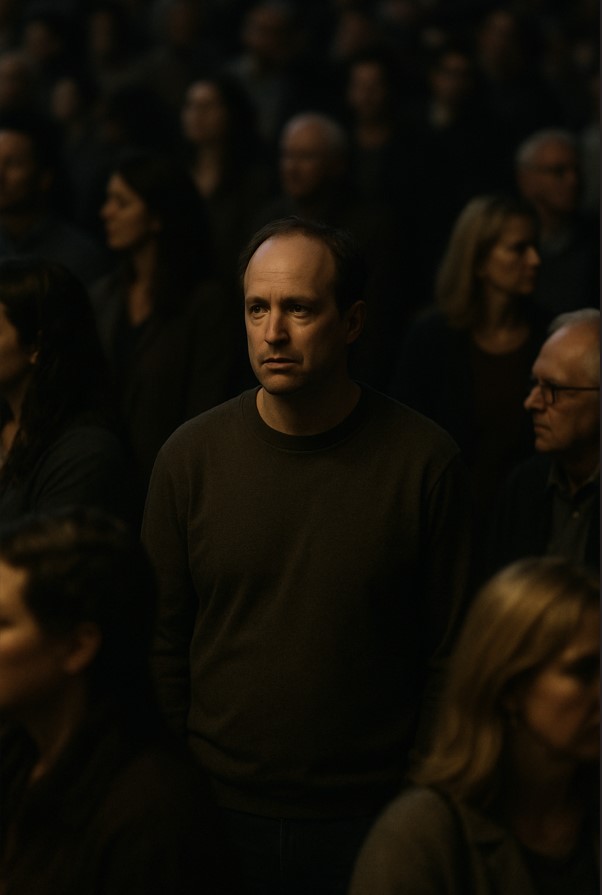
This is the story of what it means to grow up unseen.
And what it looks like to finally reclaim your place in your own life.

Growing Up “Lucky” But Unseen
Lila was adopted by her aunt at age three.
Her birth parents vanished into addiction.
Her aunt took her in out of obligation, not affection.
“You’re lucky I didn’t leave you in foster care,” she’d often say.
“So don’t ask for more than you’re given.”
And Lila didn’t.
She never asked for birthday parties.
Never asked for hugs.
Never asked to be called “daughter.”
She didn’t even ask to be called by name.
Because in that house, names were reserved for “real” family.
She became “the girl.”
“Her.”
“That one.”

How Invisibility Becomes Identity
The human heart has a fundamental need: to be known.
To be acknowledged.
To be called by name.
When that need is unmet, especially in childhood, a dangerous story takes root:
“If no one sees me, I must not exist.”
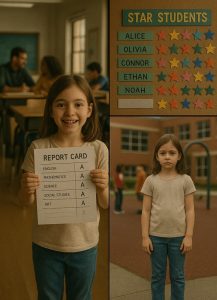
Lila excelled in school, hoping someone would notice.
Straight A’s. Star charts. Teacher’s pet.
But when she brought her report cards home, they were scanned—then tossed into a drawer.
Or worse:
Thrown into the junk box.
Not one “I’m proud of you.”
Not one “Well done.”
So she internalized the message:
“I have to work to be seen.
And even then—I might not matter.”
The Day She Found the Box
Lila was 38 when she returned to her childhood home.
The house was in foreclosure.
She was there to clear out old belongings before demolition.
She wasn’t expecting to feel anything.
But then—she found the box.
And inside it:
Her entire childhood, thrown in with outdated grocery ads.
She sat on the floor and flipped through her report cards.
Each one glowing with praise.
Each one anonymous.
And for the first time, the pain hit her—not as an adult, but as the child who once stood in the hallway, holding that paper, hoping someone would say, “Lila, you did good.”
They never did.


Naming What Was Denied
She could’ve thrown the report cards away.
Instead, she did something radical.
She opened her purse.
Took out a black pen.
And in bold, capital letters, wrote across each page:
LILA EVANS.
She wasn’t just writing her name.
She was rewriting her history.
Not to deny what happened.
But to claim her place in the story she had been erased from.
Why Naming Matters in Healing
There’s a reason why therapists ask, “What did people call you?”
There’s a reason spiritual traditions include naming ceremonies.
Because being named means being known.
Being remembered.
Being anchored in belonging.
Neglect doesn’t just forget birthdays.
It forgets identities.
It tells a child:
- “You’re not worth remembering.”
- “You’re not worth calling.”
- “You’re not really here.”
But reclaiming your name is more than symbolic.
It’s spiritual.
It’s saying:
“I was always here.
You just refused to see me.
But now—I see myself.”

What Happens When You Reclaim Your Name
Lila didn’t suddenly stop grieving.
There were still triggers:
- Hearing someone say “sweetheart” to their daughter
- Seeing other names embroidered on backpacks
- Filling out forms where “Next of Kin” left her wondering who to write
But she started:
- Signing her full name in birthday cards
- Speaking her story out loud in therapy
- Correcting people who mispronounced her name
- Getting a library card just to see her name in print
Small things.
But each one a ritual of remembrance.

You Deserve to Be Known
If you grew up like Lila—unclaimed, unnamed, unnoticed—you might have:
- A hard time asking for what you need
- A deep fear of taking up space
- An unconscious belief that if you disappear, no one will notice
But hear this:
You do not have to stay invisible.
You are not “too much.”
You are not “replaceable.”
You are not “a guest” in this life.
You are here.
You matter.
You always did.

5 Ways to Reclaim Your Visibility
🧾 1. Say Your Name Out Loud
To yourself. In the mirror. In a journal.
Speak it with the reverence it was always owed.
✍️ 2. Sign Your Work
Every text. Every piece of art. Every email.
You are not anonymous anymore.
📛 3. Correct People
If they forget or mispronounce your name, gently correct them.
You deserve to be called properly.
📓 4. Write a Letter to “The Girl Without a Name”
Tell her everything she needed to hear.
Tell her she was never junk.
💌 5. Create Something That Carries Your Name
An email. A poem. A website. A piece of clothing.
Let the world feel your presence.
Conclusion: You Belong in Your Own Story
When Lila left that house, she didn’t take much.
Just a handful of old report cards.
And her name—written in bold across every single one.
She didn’t need anyone else to validate it anymore.
Because now, she knew.
She was not “junk.”
She was not “the girl.”
She was not invisible.
She was—and is—Lila Evans.
And that name?
It holds the history, the ache, the beauty of someone who survived being erased—and chose to rewrite herself back in.

💬 Let’s Talk
Did you grow up feeling unseen?
Were you the “quiet one”? The “good kid”? The “easy to ignore” child?
Drop a 🖋️ in the comments if you’re reclaiming your voice and your place in the world.
Tag someone who deserves to hear:
“You were never forgettable.
You just weren’t celebrated the way you deserved.”
Keywords used (naturally embedded):
- childhood neglect
- emotional invisibility
- healing from childhood trauma
- inner child healing
- reparenting your identity
- reclaiming your name
- being unseen as a child
- adult survivors of emotional neglect