
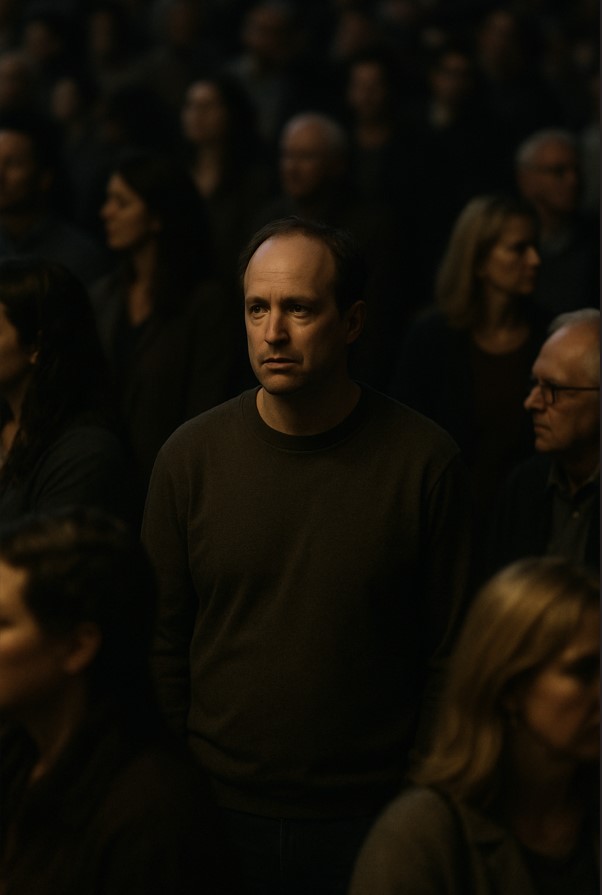
Introduction:
James delivered thousands of letters during his 40 years as a postman.
Love notes. Apologies. Birth announcements. Funeral invites.
Words that made people cry, laugh, remember.
But not once—not ever—did he receive one addressed to him with the words he had longed to hear since childhood:
“I love you. Come here. Let me hold you.”
This is the story of how emotional neglect rewires the body.
Of how boys are taught that hugs are weakness.
And what it feels like—at 62 years old—to finally let yourself be held.
If you’ve spent a lifetime giving to others while quietly starving for affection, this one’s for you.

The Boy Who Raised Himself
James grew up in a house where silence screamed louder than words.
His father was a man of rules:
Dinner at 6. No elbows on the table. No tears. No hugs.
When James was six, he reached out for a hug before school.
His father stared at him and asked:
“What are you doing?”
“Be a man. Stand up straight.”
That day, something in James sat down and never got back up.
He never reached for affection again.

How Emotional Withholding Shapes a Life
James learned early that:
- Touch was weakness
- Needs were dangerous
- Affection would be punished or ignored
So he became self-sufficient.
He made his own sandwiches. Walked himself to school.
Praised himself in the mirror after winning spelling bees.
And when people told him, “You’re so independent,” he smiled.
But inside, a boy was still waiting to be held.
Not touched.
Not used.
Held.
There’s a difference.

The Adult Who Stopped Asking
James got married young. Divorced quickly.
He raised two boys—showing up for games, helping with homework.
But when they cried, he froze.
He never knew how to hold softness.
He never learned.
His sons would later say, “Dad was solid. But not warm.”
At work, he was beloved for his dependability.
Never sick. Never late.
He remembered birthdays. Asked about grandkids.
But when he retired, no one asked him how he was.
Because he never let anyone close enough to know.

The Moment That Undid Him
James moved into a nursing home when Parkinson’s began to affect his balance.
He said he preferred being alone.
But one afternoon, in the garden courtyard, a nurse named Elena sat beside him.
She didn’t ask about his medication.
She asked:
“Did anyone ever show you how to be cared for?”
James didn’t answer.
Couldn’t.
Because no one had ever asked him that before.
Not in 62 years.
And then she did something that shattered him—quietly.
She opened her arms.
And waited.

The Hug That Finally Happened
James sat stiffly.
He wanted to laugh. Brush it off. Make a joke.
He almost said, “I’m good.”
But something in him—something ancient and small and starving—moved.
He leaned in.
Awkward. Unsure.
A man who had carried the world but never been carried.
And in Elena’s arms, he cried for the boy who stood in the hallway in 1967, reaching out for a father who couldn’t see him.
She didn’t say anything.
She just held him.
And that was enough.

When Affection Feels Like a Foreign Language
If you’ve ever:
- Brushed off compliments
- Tensed up when someone offered comfort
- Felt uncomfortable being cared for
- Pushed people away before they could get close…
You’re not cold.
You’re not broken.
You’re wounded.
You learned that affection wasn’t safe.
That love was conditional.
That to be embraced was to risk being ridiculed—or abandoned.
But the truth is:
You didn’t need to “man up.”
You needed to be loved down.

Learning to Receive What Was Denied
Healing doesn’t mean you suddenly crave hugs or cry easily.
It means:
- Letting yourself be supported
- Letting your voice tremble when you ask for help
- Letting someone make you tea, even if it feels indulgent
- Letting someone say, “You’re not alone,” and believing it
You don’t have to perform strength anymore.
You are strong.
Strong enough to finally receive.
5 Gentle Ways to Let Yourself Be Held
🤗 1. Let Someone See You Struggle
You don’t need to collapse.
Just say, “I’m having a hard day.”
💬 2. Ask for One Thing
A ride. A check-in. A small favor.
Let yourself be the one who needs, not just the one who gives.
🧠 3. Reframe What Touch Means
Affection isn’t manipulation.
Start with a handshake, a pat on the back. Build trust slowly.
🫂 4. Practice Self-Holding
Literally.
Wrap your arms around yourself. Say:
“You deserved this. Even back then.”
🧸 5. Let the Child Inside You Be Comforted
Visualize a moment when you needed someone.
Now, show up for that version of you.
Conclusion: You Can Be Held Now
James didn’t need hundreds of hugs.
He just needed one.
One moment that told him:
“You’re not weak for wanting comfort.
You’re human. And humans need holding.”
We live in a culture that celebrates stoicism—especially in men.
But silence isn’t strength when it hides suffering.
If you were denied affection, but still long for it—you’re not needy.
You’re remembering what love is supposed to feel like.
And maybe today is the day
you let yourself feel it.
💬 Let’s Talk
Did you grow up thinking love had to be earned?
Do you tense up when people offer kindness?
Drop a 🤗 in the comments if you’re learning to receive.
Or tag someone who deserves to know:
“You are not too much.
You are not too late.
And you are absolutely worth holding.”
Keywords used (naturally embedded):
- childhood emotional neglect
- healing from lack of affection
- adult survivors of emotional abuse
- learning to accept love
- inner child healing
- masculinity and emotional expression
- reparenting after trauma
how to receive affection