Forgiving the Past (Not the People Who Hurt You)

Keyword focus: forgiving the past, healing without forgiving abuser

Forgiving the Past (Not the People Who Hurt You)

Forgiveness is a complicated word, especially when it comes to childhood pain.

People say things like, “You’ll never be free until you forgive them.” But what if the people who hurt you never said sorry? What if they kept hurting you—or still are?

Here’s what I want you to know:

You don’t have to forgive the people who broke you. But you can forgive the past that tried to define you.
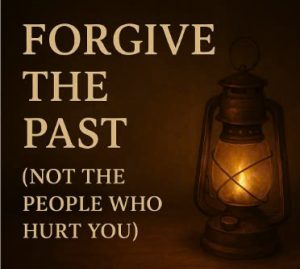
You don’t have to forgive the people who broke you. But you can forgive the past that tried to define you.

What Forgiveness Isn’t

Forgiveness isn’t forgetting. It isn’t pretending. It isn’t excusing. It isn’t letting anyone off the hook.

You do not need to say, “It’s okay.” Because it wasn’t.

Forgiveness is not a gift to the abuser. It’s a gift to yourself. And it starts when you shift the direction of your anger—from what happened then, to what you need now.

Releasing the Grip of Rage

Rage is sacred. It protects us. It tells us, “This is wrong.” But rage is also heavy. It’s exhausting. And if left unattended, it can harden into bitterness that poisons joy.

When you forgive the past—not the people, but the time—you are saying:

  • “I will not let these moments define the rest of my life.”
  • “I deserve peace, even if they never change.”

Forgiving the past means reclaiming your time, your voice, your worth.

Forgiveness As Freedom

You don’t need to tell them. You don’t need to see them. You don’t need to speak a word aloud.

You can whisper it into a letter you never send. You can cry it out in a room where no one watches. You can burn the old stories in a journal and write new ones.

What matters is this: that you stop letting them live rent-free in your head and heart.

You are allowed to say:

  • “You no longer have power here.”
  • “I choose me.”

The Example of Radical Forgiveness

There’s a story of a woman who lived through war. She watched her family die. When the dust settled, she didn’t seek revenge.

Someone asked her, “Don’t you want justice?”

She said, “I remember what they did. But I won’t let that night ruin the rest of my life.”

She didn’t forgive the killers. She forgave the night. She forgave history. So she could have a future.

Forgive the Night

You are not expected to forgive the hands that harmed you. But you can forgive the years that felt like shadows. You can forgive the birthdays no one celebrated. The report cards no one looked at. The words you needed but never heard.

Forgiveness of the past means you no longer punish yourself for things you couldn’t control.

It means you no longer rehearse the pain on a loop. It means peace is no longer postponed until someone else earns it.

Today, You Choose Peace

You’ve suffered enough. You’ve carried the weight long enough.

Forgiveness of the past is not forgetting what happened. It’s remembering without bleeding. It’s saying: “That was part of my story, but not the whole of it.”

It’s letting the light touch the places that hurt.

You are not weak for wanting peace. You are brave for choosing it.


You Don’t Have to Forgive to Heal – What Real Emotional Release Looks Like


You’ve heard it all before: “Forgive and forget.” “Just let it go.” “It’s the only way to move on.”

But what if I told you… you don’t have to forgive the person who hurt you in order to heal?

What if true healing isn’t about them at all—but about you reclaiming your power?

Forgiveness can be a beautiful thing. But when rushed, forced, or demanded, it becomes just another wound. So let’s redefine what healing looks like—on your terms.

  1. The Pressure to Forgive Too Soon

Too often, survivors are asked to make peace with monsters before they’ve even stopped bleeding.

Well-meaning friends, faith leaders, or even therapists might say, “You’ll feel better once you forgive.”

But when forgiveness is pushed before the pain has been witnessed, it only silences the truth.

You don’t owe forgiveness to the one who never apologized. You don’t owe absolution to someone who still denies what they did.

  1. What Forgiveness is Not

Let’s be clear:

  • Forgiveness is not saying “it was okay.”
  • Forgiveness is not reconciling.
  • Forgiveness is not forgetting.
  • Forgiveness is not pretending it didn’t change you.

Real healing says: It mattered. It hurt. And I’m allowed to grow beyond it—whether they’re sorry or not.

  1. The Healing That Doesn’t Require Forgiveness

Healing is:

  • Naming what happened.
  • Feeling the feelings you were never allowed to have.
  • Validating your pain without minimizing it.
  • Releasing the belief that it was your fault.

You can rage. You can cry. You can build boundaries so high they never touch you again.

That is healing.

  1. Forgiveness of Self Comes First

If there’s any forgiveness that truly matters, it’s this:

Forgiving yourself.

For the years you stayed silent. For the ways you coped that hurt you. For thinking you deserved it. For the self-blame you carried like a second skin.

You didn’t cause it. You were surviving. You did what you had to do.

Now you get to stop surviving and start healing.

  1. What Letting Go Really Looks Like

Letting go isn’t a moment. It’s a series of micro-decisions:

  • To stop explaining your pain to those who don’t want to understand.
  • To stop chasing closure from people incapable of giving it.
  • To stop believing that you are the broken one.

Letting go means saying: “I release you—not because you earned it, but because I deserve peace.”

You’re not freeing them. You’re freeing yourself.

  1. A Ritual for Release Without Forgiveness

Try this:

  1. Write a letter to the person who hurt you. Say everything.
  2. Don’t hold back. Let your truth rise.
  3. Burn it, tear it, bury it—whatever feels right.
  4. Whisper: “I don’t need to forgive to heal. But I do release this from my body.”

You may cry. That’s healing. You may feel nothing at first. That’s protection.

Repeat when needed. This is your journey.

Closing Words from Grandpa Eli

My dear one, You are not required to carry the weight of their sins just to seem “kind.” You don’t need to forgive to move forward. You need to feel. To grieve. To release.

When you are ready—on your own terms—you’ll know what needs to be forgiven and what simply needs to be released.

And whatever you choose… I’ll be here, cheering for your freedom.

💬 Has someone ever pushed you to forgive before you were ready? Share if you feel safe. Your story may help someone else feel seen.

#RedefineForgiveness #HealingWithoutForgiveness #SelfForgiveness #EmotionalRelease #YouDeservePeace