The Piano That Never Played: How Childhood Trauma Silenced a Gift—And What It Took to Hear Music Again

Introduction:

There are moments in life when silence is louder than any sound.
For Jonah, a gifted music teacher, that moment happened when he was seven years old.
It wasn’t just the piano that broke that night—it was something inside him.
This is not just his story. It’s the story of anyone who has buried their gifts, blamed themselves for being hurt, and forgotten what it feels like to take up space without apology.

The Innocence of Music—and the Beginning of Silence

Jonah first discovered the piano like most children discover wonder: accidentally.

His mother worked nights. His father drank. And the only consistent presence in his home was a secondhand upright piano that stood quietly in the living room.

At night, when the world was asleep, Jonah would tiptoe downstairs, place his small fingers on the cool keys, and play.
He didn’t know the names of the notes.
He didn’t read music.
But somehow, the melodies came.

In those moments, he wasn’t afraid.
He wasn’t invisible.
He was alive.

Until the night the music stopped.

The Night That Changed Everything

It was winter. Jonah had just learned to play a simple lullaby by ear. He was proud. Proud in the way only a child can be when they’ve done something magical and want to be seen.

He was playing softly—just enough for the notes to dance in the dark—when his father stormed in, drunk.

“What did I tell you about making noise?”
“Stupid little show-off.”

And then came the sound Jonah would never forget:
A heavy ashtray flying across the room, slamming into the side of the piano with a thud that echoed like thunder.
The soundboard cracked.
The music stopped.
So did Jonah.

That night, the piano became a tomb. And Jonah buried a piece of himself inside it.

What Happens When a Child Blames Themselves

The most damaging thing about abuse isn’t always the action itself.
It’s the meaning the child assigns to it.
Jonah didn’t think, “My father has a problem.”
He thought, “I was too loud.”
“I was too much.”
“I ruined it.”

So he became small.
He stopped talking in class.
He never raised his hand.
When people praised him, he panicked.
Because somewhere deep inside, he believed that being noticed meant being punished.

This is how trauma rewrites your story—without your permission.

Growing Up With the Wrong Story

As Jonah grew older, he carried his talents like contraband.

He still played piano, but never in public.
He studied music theory but lied when asked if he could perform.
He graduated with honors—but sat in the back row during the ceremony.
His motto became: Don’t be seen, and you can’t be hurt.

Ironically, he became a music teacher.
But he only taught children.
Why?
Because kids didn’t expect perfection.
They didn’t judge.
And he knew how to make children feel safe—because he never had that himself.

The Day the Past Came Rushing Back

It wasn’t therapy.
It wasn’t a book.
It wasn’t some magical epiphany.

It was a moment.

One of his students—a six-year-old named Oliver—flinched when Jonah raised his voice to get the class’s attention.
A tiny, involuntary motion.
But Jonah saw it.
He knew that flinch.
He remembered that flinch.

He went home that night and stood in front of his childhood piano—now sitting dusty in his living room, untouched for years.
The crack was still there.
So was the silence.
But something inside Jonah stirred.

He sat down.
Placed his hands on the keys.
And for the first time in decades—he played.

It wasn’t perfect.
Some notes were flat.
The keys stuck.
But as the music filled the room, so did something else: grief.

And then, tears.

Why Self-Forgiveness Is the First Note of Healing

That night, Jonah didn’t forgive his father.
He wasn’t ready.
But he did forgive himself.

He said, out loud:

“I’m sorry, Jonah.
You were just a child.
You did nothing wrong.
You only wanted to be heard.”

That’s where healing begins.

Not with perfect closure.
Not with confrontation.
But with self-forgiveness.

When you finally stop asking, “What did I do wrong?” and start saying, “It wasn’t my fault.”

How Childhood Trauma Silences Our Gifts

So many of us bury our talents because of pain.
We were too loud. Too expressive. Too emotional.
And someone made us believe we had to shrink to be safe.

So we hide.

We stop singing.
We put away the paintbrush.
We delete our writing.
We silence the part of us that made us feel most alive.

But that part?
It never leaves.
It waits.

And it returns when we’re ready to come home to ourselves.

What Jonah’s Story Teaches Us

Jonah’s story isn’t just about music.
It’s about reclaiming what was stolen.
It’s about letting go of the lies planted in childhood.
It’s about learning that we were never too much.
We were simply too beautiful for a world that wasn’t ready to receive us.

If you have a “piano” inside you—a gift, a joy, a voice—you’ve locked away because of fear or pain…

Maybe today is the day you sit down and play again.

Even if your hands tremble.
Even if you cry.
Even if no one else hears.

Conclusion: From Silence to Song

You were never the problem.
You were never too loud.
You were never too bright.
You were never too much.

You were a child trying to survive.

And now?
Now you get to live.
Not for anyone else.
Not for approval.
But for yourself.

Pick up your instrument.
Paint your canvas.
Speak your truth.
Dance like no one’s watching—but know that you matter even if they are.

Because the silence ends now.

💬 Let’s Talk

Have you ever buried a part of yourself to stay safe?
Did you have to unlearn shame in order to reclaim your gifts?
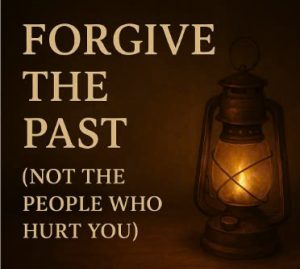
Forgiving the Past (Not the People Who Hurt You)

Keyword focus: forgiving the past, healing without forgiving abuser

Forgiving the Past (Not the People Who Hurt You)

Forgiveness is a complicated word, especially when it comes to childhood pain.

People say things like, “You’ll never be free until you forgive them.” But what if the people who hurt you never said sorry? What if they kept hurting you—or still are?

Here’s what I want you to know:

You don’t have to forgive the people who broke you. But you can forgive the past that tried to define you.

You don’t have to forgive the people who broke you. But you can forgive the past that tried to define you.

What Forgiveness Isn’t

Forgiveness isn’t forgetting. It isn’t pretending. It isn’t excusing. It isn’t letting anyone off the hook.

You do not need to say, “It’s okay.” Because it wasn’t.

Forgiveness is not a gift to the abuser. It’s a gift to yourself. And it starts when you shift the direction of your anger—from what happened then, to what you need now.

Releasing the Grip of Rage

Rage is sacred. It protects us. It tells us, “This is wrong.” But rage is also heavy. It’s exhausting. And if left unattended, it can harden into bitterness that poisons joy.

When you forgive the past—not the people, but the time—you are saying:

  • “I will not let these moments define the rest of my life.”
  • “I deserve peace, even if they never change.”

Forgiving the past means reclaiming your time, your voice, your worth.

Forgiveness As Freedom

You don’t need to tell them. You don’t need to see them. You don’t need to speak a word aloud.

You can whisper it into a letter you never send. You can cry it out in a room where no one watches. You can burn the old stories in a journal and write new ones.

What matters is this: that you stop letting them live rent-free in your head and heart.

You are allowed to say:

  • “You no longer have power here.”
  • “I choose me.”

The Example of Radical Forgiveness

There’s a story of a woman who lived through war. She watched her family die. When the dust settled, she didn’t seek revenge.

Someone asked her, “Don’t you want justice?”

She said, “I remember what they did. But I won’t let that night ruin the rest of my life.”

She didn’t forgive the killers. She forgave the night. She forgave history. So she could have a future.

Forgive the Night

You are not expected to forgive the hands that harmed you. But you can forgive the years that felt like shadows. You can forgive the birthdays no one celebrated. The report cards no one looked at. The words you needed but never heard.

Forgiveness of the past means you no longer punish yourself for things you couldn’t control.

It means you no longer rehearse the pain on a loop. It means peace is no longer postponed until someone else earns it.

Today, You Choose Peace

You’ve suffered enough. You’ve carried the weight long enough.

Forgiveness of the past is not forgetting what happened. It’s remembering without bleeding. It’s saying: “That was part of my story, but not the whole of it.”

It’s letting the light touch the places that hurt.

You are not weak for wanting peace. You are brave for choosing it.


You Don’t Have to Forgive to Heal – What Real Emotional Release Looks Like


You’ve heard it all before: “Forgive and forget.” “Just let it go.” “It’s the only way to move on.”

But what if I told you… you don’t have to forgive the person who hurt you in order to heal?

What if true healing isn’t about them at all—but about you reclaiming your power?

Forgiveness can be a beautiful thing. But when rushed, forced, or demanded, it becomes just another wound. So let’s redefine what healing looks like—on your terms.

  1. The Pressure to Forgive Too Soon

Too often, survivors are asked to make peace with monsters before they’ve even stopped bleeding.

Well-meaning friends, faith leaders, or even therapists might say, “You’ll feel better once you forgive.”

But when forgiveness is pushed before the pain has been witnessed, it only silences the truth.

You don’t owe forgiveness to the one who never apologized. You don’t owe absolution to someone who still denies what they did.

  1. What Forgiveness is Not

Let’s be clear:

  • Forgiveness is not saying “it was okay.”
  • Forgiveness is not reconciling.
  • Forgiveness is not forgetting.
  • Forgiveness is not pretending it didn’t change you.

Real healing says: It mattered. It hurt. And I’m allowed to grow beyond it—whether they’re sorry or not.

  1. The Healing That Doesn’t Require Forgiveness

Healing is:

  • Naming what happened.
  • Feeling the feelings you were never allowed to have.
  • Validating your pain without minimizing it.
  • Releasing the belief that it was your fault.

You can rage. You can cry. You can build boundaries so high they never touch you again.

That is healing.

  1. Forgiveness of Self Comes First

If there’s any forgiveness that truly matters, it’s this:

Forgiving yourself.

For the years you stayed silent. For the ways you coped that hurt you. For thinking you deserved it. For the self-blame you carried like a second skin.

You didn’t cause it. You were surviving. You did what you had to do.

Now you get to stop surviving and start healing.

  1. What Letting Go Really Looks Like

Letting go isn’t a moment. It’s a series of micro-decisions:

  • To stop explaining your pain to those who don’t want to understand.
  • To stop chasing closure from people incapable of giving it.
  • To stop believing that you are the broken one.

Letting go means saying: “I release you—not because you earned it, but because I deserve peace.”

You’re not freeing them. You’re freeing yourself.

  1. A Ritual for Release Without Forgiveness

Try this:

  1. Write a letter to the person who hurt you. Say everything.
  2. Don’t hold back. Let your truth rise.
  3. Burn it, tear it, bury it—whatever feels right.
  4. Whisper: “I don’t need to forgive to heal. But I do release this from my body.”

You may cry. That’s healing. You may feel nothing at first. That’s protection.

Repeat when needed. This is your journey.

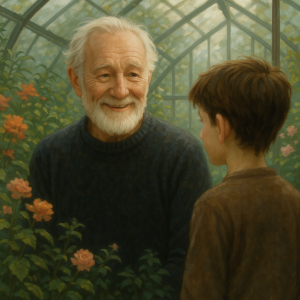
Closing Words from Grandpa Eli

My dear one, You are not required to carry the weight of their sins just to seem “kind.” You don’t need to forgive to move forward. You need to feel. To grieve. To release.

When you are ready—on your own terms—you’ll know what needs to be forgiven and what simply needs to be released.

And whatever you choose… I’ll be here, cheering for your freedom.

💬 Has someone ever pushed you to forgive before you were ready? Share if you feel safe. Your story may help someone else feel seen.

#RedefineForgiveness #HealingWithoutForgiveness #SelfForgiveness #EmotionalRelease #YouDeservePeace

A Letter With No Stamp

Lucas had stopped flinching.

He still didn’t laugh much. But he had begun to hum—softly—when planting carrots, and once, Peter caught him tracing his finger along the petals of a peony like it was a secret worth keeping.

Then one rainy evening, Lucas said it.

“I think I want to see my father.”

Peter didn’t answer right away. He looked at the muddy windows of the greenhouse, where drops slid down like tiny rivers breaking loose. “Why?” he finally asked.

“I want him to know… he didn’t win.”

They worked on the letter together. Lucas’s hands shook at first. He kept crossing things out. Then he stopped. He wrote:

I’m not writing this so you’ll say sorry.

I’m writing this so I can stop carrying what you should have never put on me.

I’m not afraid of you anymore.

They didn’t mail it. That wasn’t the point.

Later that week, Peter took Lucas on a walk through the forest trail behind the greenhouse. They stopped at an old bench—weathered, quiet, and covered in moss.

That’s where Grandpa Eli waited.

He wore his usual navy sweater, hands clasped gently on his lap, eyes twinkling with the kind of kindness that made people speak without fear.

Lucas sat down, wordless.

“You don’t need to tell me what happened,” Eli said. “You’ve lived it already. But if you want to, I’ll listen.”

And Lucas did.

I’m writing this so I can stop carrying what you should have never put on me.


For the first time, he spoke every word—the names, the bruises, the nights he pretended sleep so his father would stop yelling. He didn’t cry. He didn’t tremble.

When he finished, Grandpa Eli nodded.

“You’ve done the hardest part,” he said. “You remembered… and you stayed.”

That night, Lucas tore the letter in half. Then he burned it in the firepit.

Peter didn’t stop him.

Because sometimes, forgiveness isn’t about letting someone off the hook.

It’s about unhooking yourself.


You Don’t Have to Fo Can Stop Carrying It Around Like a Backpack of Stones.

A letter from Grandpa Eli

My dear one,

If I could sit beside you today with a cup of warm tea in hand, I’d tell you this:

You don’t have to forget what happened.

You don’t have to erase the past, and you certainly don’t have to excuse the people who hurt you.
Some things were unfair.
Some words cut deep.
Some silences were louder than any scream. But let me tell you something that might just change your life:

You can stop carrying it around like a backpack of stones.

I know you’ve been holding it all together for a long time.
You carry the memories, the what-ifs, the shame that was never yours to begin with.
You keep those stories in your bones—thinking if you set them down, you’ll forget… or that it means they didn’t matter.

But darling, carrying pain doesn’t honor it.
Healing does.

And healing doesn’t mean pretending it didn’t hurt.
It means saying: Yes, this happened. Yes, it changed me. But it no longer gets to weigh me down.

Every day you keep carrying those stones, you tell your body and heart that you’re still in that past.
But you’re not.
You’re here now.
You’re growing.
You’re brave enough to put one rock down at a time.

That heavy pack on your back?
It was never yours to carry forever.

So maybe today, you lay down just one stone.
Maybe today, you whisper:
“I didn’t deserve that.”
“I am not to blame.”
“I get to move forward.”

You are allowed to remember without reliving.

You are allowed to release without excusing.
You are allowed to forgive—not them, maybe—but yourself…
…for the years you spent surviving.

You are not weak for wanting to feel light again.
You are human.
You are healing.
And you are worthy of peace.

With warmth in every wrinkle,
Grandpa Eli
🧣 The friend who shows up when your heart needs someone to understand.