The Hug That Didn’t Happen: When Love Was Withheld in Childhood—And What It Means to Be Held at Last

Introduction:

James delivered thousands of letters during his 40 years as a postman.

Love notes. Apologies. Birth announcements. Funeral invites.
Words that made people cry, laugh, remember.

But not once—not ever—did he receive one addressed to him with the words he had longed to hear since childhood:

“I love you. Come here. Let me hold you.”

This is the story of how emotional neglect rewires the body.
Of how boys are taught that hugs are weakness.
And what it feels like—at 62 years old—to finally let yourself be held.

If you’ve spent a lifetime giving to others while quietly starving for affection, this one’s for you.

The Boy Who Raised Himself

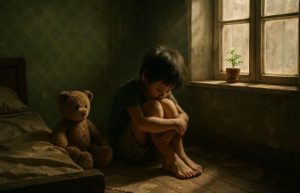
James grew up in a house where silence screamed louder than words.

His father was a man of rules:
Dinner at 6. No elbows on the table. No tears. No hugs.

When James was six, he reached out for a hug before school.
His father stared at him and asked:

“What are you doing?”
“Be a man. Stand up straight.”

That day, something in James sat down and never got back up.

He never reached for affection again.

How Emotional Withholding Shapes a Life

James learned early that:

  • Touch was weakness 
  • Needs were dangerous 
  • Affection would be punished or ignored 

So he became self-sufficient.

He made his own sandwiches. Walked himself to school.
Praised himself in the mirror after winning spelling bees.

And when people told him, “You’re so independent,” he smiled.
But inside, a boy was still waiting to be held.

Not touched.
Not used.
Held.

There’s a difference.

The Adult Who Stopped Asking

James got married young. Divorced quickly.

He raised two boys—showing up for games, helping with homework.
But when they cried, he froze.

He never knew how to hold softness.
He never learned.

His sons would later say, “Dad was solid. But not warm.”

At work, he was beloved for his dependability.
Never sick. Never late.
He remembered birthdays. Asked about grandkids.

But when he retired, no one asked him how he was.

Because he never let anyone close enough to know.

The Moment That Undid Him

James moved into a nursing home when Parkinson’s began to affect his balance.
He said he preferred being alone.

But one afternoon, in the garden courtyard, a nurse named Elena sat beside him.
She didn’t ask about his medication.

She asked:

“Did anyone ever show you how to be cared for?”

James didn’t answer.
Couldn’t.

Because no one had ever asked him that before.
Not in 62 years.

And then she did something that shattered him—quietly.

She opened her arms.

And waited.

The Hug That Finally Happened

James sat stiffly.

He wanted to laugh. Brush it off. Make a joke.
He almost said, “I’m good.”

But something in him—something ancient and small and starving—moved.

He leaned in.

Awkward. Unsure.
A man who had carried the world but never been carried.

And in Elena’s arms, he cried for the boy who stood in the hallway in 1967, reaching out for a father who couldn’t see him.

She didn’t say anything.
She just held him.

And that was enough.

When Affection Feels Like a Foreign Language

If you’ve ever:

  • Brushed off compliments 
  • Tensed up when someone offered comfort 
  • Felt uncomfortable being cared for 
  • Pushed people away before they could get close… 

You’re not cold.
You’re not broken.
You’re wounded.

You learned that affection wasn’t safe.
That love was conditional.
That to be embraced was to risk being ridiculed—or abandoned.

But the truth is:
You didn’t need to “man up.”
You needed to be loved down.

Learning to Receive What Was Denied

Healing doesn’t mean you suddenly crave hugs or cry easily.

It means:

  • Letting yourself be supported 
  • Letting your voice tremble when you ask for help 
  • Letting someone make you tea, even if it feels indulgent 
  • Letting someone say, “You’re not alone,” and believing it 

You don’t have to perform strength anymore.
You are strong.
Strong enough to finally receive.

5 Gentle Ways to Let Yourself Be Held

🤗 1. Let Someone See You Struggle

You don’t need to collapse.
Just say, “I’m having a hard day.”

💬 2. Ask for One Thing

A ride. A check-in. A small favor.
Let yourself be the one who needs, not just the one who gives.

🧠 3. Reframe What Touch Means

Affection isn’t manipulation.
Start with a handshake, a pat on the back. Build trust slowly.

🫂 4. Practice Self-Holding

Literally.
Wrap your arms around yourself. Say:

“You deserved this. Even back then.”

🧸 5. Let the Child Inside You Be Comforted

Visualize a moment when you needed someone.
Now, show up for that version of you.

Conclusion: You Can Be Held Now

James didn’t need hundreds of hugs.
He just needed one.

One moment that told him:

“You’re not weak for wanting comfort.
You’re human. And humans need holding.”

We live in a culture that celebrates stoicism—especially in men.
But silence isn’t strength when it hides suffering.

If you were denied affection, but still long for it—you’re not needy.
You’re remembering what love is supposed to feel like.

And maybe today is the day
you let yourself feel it.

💬 Let’s Talk

Did you grow up thinking love had to be earned?
Do you tense up when people offer kindness?

Drop a 🤗 in the comments if you’re learning to receive.
Or tag someone who deserves to know:

“You are not too much.
You are not too late.
And you are absolutely worth holding.”

Keywords used (naturally embedded):

  • childhood emotional neglect 
  • healing from lack of affection 
  • adult survivors of emotional abuse 
  • learning to accept love 
  • inner child healing 
  • masculinity and emotional expression 
  • reparenting after trauma 

how to receive affection
The Past Will Always Be There But It Doesn’t Have to Rule You

Keyword focus: overcoming childhood trauma, does trauma define you

. No matter how far we run, no matter how much we grow, the past finds ways to whisper.
No matter how far we run, no matter how much we grow, the past finds ways to whisper.

The Past Will Always Be There—But It Doesn’t Have to Rule You

There are some stories in life that never fade. Some memories that live just under the skin. No matter how far we run, no matter how much we grow, the past finds ways to whisper.

But here’s what I want to tell you, my dear: it doesn’t have to rule you.

The Shadow That Lingers

You may have worked hard to build a life—maybe a family, a job, a home. On the outside, it might even look like you’ve moved on. But inside, a part of you still flinches. You still second-guess yourself. You still carry echoes of old fear.

Because trauma doesn’t obey time. And the past doesn’t stay in the past just because the calendar changed.

The truth is: your past shaped you. But it does not get to write the ending.

The Wounds That Speak in Silence

For many survivors of a difficult childhood, the past doesn’t scream. It whispers:

  • “You’re not good enough.”
  • “You’re too much.”
  • “You always mess it up.”

These aren’t your true voice—they’re the internalized voices of those who hurt you. But when they go unchallenged, they become the story you believe.

The Turning Point: When You Decide to Reclaim Power

There comes a moment—sometimes quietly, sometimes in crisis—when you realize: I don’t want to be ruled by this anymore.

That moment is everything. It doesn’t mean the pain is gone. It means you’ve chosen to stop letting it lead the way.

From here, healing can truly begin.

You Can Hold the Past Without Letting It Steer the Present

You can remember without reliving. You can honor your younger self without letting fear control your decisions. You can carry your story—and still choose peace.

The key is recognizing that your past is part of you, but not all of you.

How to Stop Letting the Past Rule

  • Name the triggers. What people, words, or situations bring old pain back to life?
  • Befriend your inner child. Talk to them. Reassure them. They’re still listening.
  • Choose new responses. What once was instinct for survival can now be replaced with conscious choice.
  • Surround yourself with safe people. Healing doesn’t happen in isolation.

Each choice is a vote for the life you want, not the one you were handed.

You Are the Author Now

Your past was written without your consent. But your future? That’s in your hands.

And with every small act of love, truth, and courage—you are editing the story.

You are not your wounds. You are the one who lived through them.

What They Did Wasn’t Your Fault – And It Never Was

Keyword focus: self-blame childhood trauma, forgiving yourself for the past

What They Did Wasn’t Your Fault—And It Never Was

Some wounds don’t scream. They whisper.

They whisper that maybe it was you. That you should have been quieter. Smarter. Better behaved. More lovable. They whisper until the echo becomes a belief: It happened because of me.

Let me say this with all the clarity an old soul can muster:

What they did to you was not your fault. And it never was.

The Lie Children Tell Themselves

When something terrible happens to a child, the world becomes unsafe—and children, eager to make sense of chaos, often come to the same heartbreaking conclusion: “It must be me.”

Why? Because it’s safer to believe you were the problem than to believe the people who were supposed to love you didn’t.

This belief becomes a scar deep in the psyche. And long after the bruises fade, the shame remains. It leaks into relationships, career choices, the way we talk to ourselves in the quiet moments.

Guilt and Shame: The Silent Twins

Guilt says, “I did something bad.” Shame says, “I am something bad.”

Many survivors of childhood trauma carry both.

They feel guilty for being “difficult children.” They feel shame for needing, for crying, for surviving. For being the ones who walked away but never quite felt free.

But here’s the truth: children cannot cause abuse. They cannot provoke neglect. They cannot deserve abandonment.

They can only react to what they are given. And no matter how they reacted, it was not a justification for mistreatment.

The Power of Rewriting the Story

You don’t get to rewrite the past, but you do get to rewrite what you believe about it.

You get to say:

  • “I was a child.”
  • “I didn’t cause this.”
  • “They were wrong.”
  • “I still matter.”

And yes, sometimes that truth is met with resistance. The part of you that still clings to self-blame might push back. That’s okay. You’re unlearning something you were taught in survival mode.

Forgiving the Child You Were

This isn’t about forgiving abusers. This is about forgiving yourself.

Forgive yourself for:

  • The ways you coped.
  • The things you didn’t understand.
  • The silence you kept.
  • The times you lashed out or shut down.

You did the best you could. And that child you were? They were brave in ways no one ever recognized.

You survived.

Healing Starts With the Truth

And the truth is this: you were innocent. You were worthy of love. And you still are.

The moment you stop blaming yourself is the moment you take your power back.

So today, when that old voice starts whispering again—tell it gently but firmly:

“I know better now. That was never my fault.”

You Were Never Meant to Carry This Alone

Keyword focus: healing from childhood trauma, inner child healing

You Were Never Meant to Carry This Alone

There are certain wounds that don’t bleed, but they live inside us. They sit silently in the back of our minds, shaping the way we see ourselves and the world around us. And often, they begin when we are too small to understand, too vulnerable to fight back, too young to even know it’s not normal. This is what it means to carry the burden of childhood trauma.

If no one told you this before, let me tell you now: you were never meant to carry this alone.

There are certain wounds that don’t bleed, but they live inside us.

A Backpack of Stones

Imagine a small child with a backpack. And every time someone yelled, ignored, insulted, shamed, or abandoned them, a stone was placed in that pack. At first it was just a few. Then more. Then even more. Until one day, the child could barely stand. But they kep

But it was. And it still is.

Because trauma that isn’t healed, doesn’t go away. It grows roots in our nervous system. It whispers in our relationships. It controls how we love, trust, speak, and even how we see ourselves in the mirror.

The Myth of Self-Reliance

Many people who grew up in pain learned to be strong too soon. They became their own protectors. They learned how to read a room in seconds. How to shrink, how to disappear, how to keep the peace.

But strength forged in fear is not peace. And independence built on survival is not freedom.

You may think you’re supposed to figure it out on your own. That you have no right to complain. That it’s too late to change anything now.

But none of that is true.

Healing Begins When We Speak the Unspoken

One of the most powerful steps in healing from childhood trauma is breaking the silence. Speaking the truth of what happened to you. Even if it’s just whispered into a journal. Even if your voice shakes. Even if you’re afraid it makes you weak.

It doesn’t make you weak. It makes you human.

Because the pain that is hidden cannot be healed. The shame that is buried will continue to rot. But the moment you let light in, even a little, the healing begins.

You may need to grieve. You may feel angry. You may feel sad about the childhood you deserved but never got. All of that is valid.

You Were Not Meant to Heal Alone

It’s a beautiful, radical thing to let someone in.

Whether it’s a therapist, a friend, a support group, or even words in a book that understand your pain—you begin to remember that you were never supposed to walk through this in isolation.

Healing is not a solo journey. It is a communal act of remembering, of witnessing, of holding one another when the weight becomes too much.

Your inner child still lives within you. And they don’t need you to be perfect. They just need you to show up, hold their hand, and promise, “We are not alone anymore.”

A Future Not Defined by the Past

You are not broken. You are someone who learned how to survive. You built walls to protect yourself. You carried weight that was never yours. And you made it here.

But survival is not the same as living.

Now, you are allowed to put the backpack down. Slowly. Gently. You are allowed to say, “I deserve softness.” You are allowed to feel joy without guilt. Love without fear. Rest without shame.

You were never meant to carry this alone. And now, you don’t have to.

Let this be the first step. Or the fiftieth. Let this be your reminder: healing from childhood trauma is possible. And your inner child is still waiting for you—not to rescue them, but to sit beside them and say, “We made it. And we’re safe now.”

This Ends With Me – Becoming the Cycle Breaker Your Family Never Had

Keywords: generational trauma, breaking the cycle, parenting after trauma, conscious parenting, emotional resilience

Somewhere, someone has to say it: “This ends with me.”

The yelling. The silent treatment. The fear in small footsteps. The shame tangled into bedtime.

It traveled through generations, passed down like a cruel inheritance. But here you are—tired, tender, trembling—and choosing differently.

You, my dear, are the cycle breaker. And though it may be the hardest role in the family… it is also the most sacred.

  1. What the Cycle Looks Like

Maybe you grew up walking on eggshells. Maybe you were never hugged. Maybe you only felt noticed when you were achieving—or when you failed.

And now, as a parent, partner, or even just a grown-up looking back… you see the patterns. The same wounds trying to make a home in you. The same voices now echoing in your own.

But you noticed. And that awareness? That’s where the break begins.

  1. Why It’s So Hard to Break Free

The pain we lived in childhood becomes our blueprint. Even when we hated it. Even when we swore we’d never repeat it.

Stress hits… and suddenly, we hear our parents in our voice. We withdraw, we raise our voices, we freeze. And afterward, the guilt eats us alive.

But here’s what I want you to hear:

You are not failing. You are interrupting. And interruptions are messy.

  1. Choosing to Parent Differently

Cycle breaking doesn’t mean perfect parenting. It means conscious parenting.

It means:

  • Apologizing when you mess up.
  • Letting your child say “no” and still be safe.
  • Saying “I love you” even when you’re angry.
  • Allowing space for big feelings—not punishing them.

It’s giving your child what you never had. And giving yourself what you always needed.

  1. Healing While You Lead

Many cycle breakers are still bleeding. Still triggered. Still afraid of becoming “just like them.”

So let me remind you: You don’t have to be fully healed to start healing the future. You just have to be willing.

Take breaks. Cry in the laundry room if you have to. But keep choosing:

  • Therapy.
  • Journaling.
  • Saying, “This isn’t how it has to be.”

Every tiny choice to respond instead of react is rebellion. Every hug you give is a revolution.

  1. Reparenting Yourself Along the Way

As you parent your children, or simply grow into your truest self, you may find parts of you still stuck in the past.

A scared child still bracing for criticism. An angry teen still trying to be seen. A broken soul still aching for approval.

Love them. Speak to them gently. Say:

  • “You didn’t deserve that.”
  • “I see you now.”
  • “We’re doing it differently.”

Because cycle breaking doesn’t just heal forward—it heals backward too.

  1. What Legacy Really Means

Legacy isn’t the wealth you leave. It’s the warmth.

It’s your child saying, “I feel safe.” It’s your partner feeling seen instead of shamed. It’s you… waking up one day, realizing the voices in your head have grown quieter.

You are not weak for wanting better. You are strong for choosing better with shaking hands.

Closing Words from Grandpa Eli

My dear one, You are the first light after a long line of storms. You are the soft voice where there used to be screams. You are the one who chose not to pass the pain forward.

You are the cycle breaker. And because of you, everything can change.

💬 If you’re walking this road—leave a 🌱 in the comments. Let the others know: we’re not doing this alone. #CycleBreaker #BreakTheChain #ConsciousParenting #GenerationalHealing #ThisEndsWithMe

You Can’t Heal What You Hide: Why Facing Your Troubled Childhood Matters

By Grandpa Eli

You were just a child.
And you didn’t get the love you needed.
Maybe there was shouting. Silence. A parent who hurt you—or wasn’t there at all.
Now, as an adult, part of you wants to forget it all.

That’s understandable.
But, my dear, that’s not healing. That’s hiding.

 Why Facing Your Troubled Childhood Matters
Why Facing Your Troubled Childhood Matters

1. 🧠 The mind never really forgets.

You may think you’ve moved on.
You may have a job, a family, and a life that looks “normal” from the outside.
But deep inside, your inner child is still there—waiting, hoping someone will finally listen.

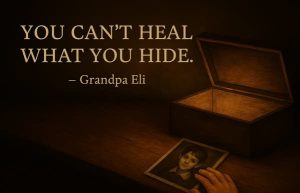
The memories might be locked in a box,
but the feelings?
They leak out in unexpected ways:

  • You panic when someone raises their voice.
  • You over-apologize, even when it’s not your fault.
  • You feel empty, even on “happy” days.
    That’s not weakness. That’s woundedness.

2. ⚠️Unhealed pain becomes silent sabotage

Research shows that adults with traumatic childhoods are:

  • More likely to suffer from anxiety, depression, and addiction.
  • More prone to self-doubt, shame, and trust issues.
  • More likely to repeat the cycle—with their own children.

You’re not broken.
You’re burdened.

And you don’t have to carry that burden alone.

3. 🧩 Pretending it didn’t happen keeps you incomplete.

You can’t erase your past—but you can rewrite your relationship with it.

Your childhood matters.
It shaped your beliefs about love, safety, and self-worth.
Trying to “move on” without understanding it is like trying to rebuild a house without checking the cracked foundation.

You deserve more than survival.
You deserve wholeness.

4. 🌱 Healing is not forgetting—it’s becoming.

When you finally turn to face the past—not with fear, but with compassion—you take back your power.

You begin to see:

  • It wasn’t your fault.
  • You did the best you could to survive.
  • The love you didn’t get then—you can give yourself now.

That’s not weakness.
That’s healing.

🕯️ A gentle invitation

If you’ve been locking the past in a box, maybe it’s time to open it—just a little.

Not to suffer again…
But to remember who you were.
To comfort that child inside.
To tell them:

“You mattered then. You matter now. And I will take care of you.”

You can’t heal what you pretend never hurt.
But you can heal.
You can grow.
You can begin again.