Forgiving the Past (Not the People Who Hurt You)

Keyword focus: forgiving the past, healing without forgiving abuser

Forgiving the Past (Not the People Who Hurt You)

Forgiveness is a complicated word, especially when it comes to childhood pain.

People say things like, “You’ll never be free until you forgive them.” But what if the people who hurt you never said sorry? What if they kept hurting you—or still are?

Here’s what I want you to know:

You don’t have to forgive the people who broke you. But you can forgive the past that tried to define you.
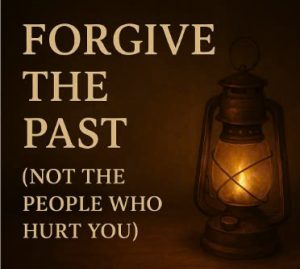
You don’t have to forgive the people who broke you. But you can forgive the past that tried to define you.

What Forgiveness Isn’t

Forgiveness isn’t forgetting. It isn’t pretending. It isn’t excusing. It isn’t letting anyone off the hook.

You do not need to say, “It’s okay.” Because it wasn’t.

Forgiveness is not a gift to the abuser. It’s a gift to yourself. And it starts when you shift the direction of your anger—from what happened then, to what you need now.

Releasing the Grip of Rage

Rage is sacred. It protects us. It tells us, “This is wrong.” But rage is also heavy. It’s exhausting. And if left unattended, it can harden into bitterness that poisons joy.

When you forgive the past—not the people, but the time—you are saying:

  • “I will not let these moments define the rest of my life.”
  • “I deserve peace, even if they never change.”

Forgiving the past means reclaiming your time, your voice, your worth.

Forgiveness As Freedom

You don’t need to tell them. You don’t need to see them. You don’t need to speak a word aloud.

You can whisper it into a letter you never send. You can cry it out in a room where no one watches. You can burn the old stories in a journal and write new ones.

What matters is this: that you stop letting them live rent-free in your head and heart.

You are allowed to say:

  • “You no longer have power here.”
  • “I choose me.”

The Example of Radical Forgiveness

There’s a story of a woman who lived through war. She watched her family die. When the dust settled, she didn’t seek revenge.

Someone asked her, “Don’t you want justice?”

She said, “I remember what they did. But I won’t let that night ruin the rest of my life.”

She didn’t forgive the killers. She forgave the night. She forgave history. So she could have a future.

Forgive the Night

You are not expected to forgive the hands that harmed you. But you can forgive the years that felt like shadows. You can forgive the birthdays no one celebrated. The report cards no one looked at. The words you needed but never heard.

Forgiveness of the past means you no longer punish yourself for things you couldn’t control.

It means you no longer rehearse the pain on a loop. It means peace is no longer postponed until someone else earns it.

Today, You Choose Peace

You’ve suffered enough. You’ve carried the weight long enough.

Forgiveness of the past is not forgetting what happened. It’s remembering without bleeding. It’s saying: “That was part of my story, but not the whole of it.”

It’s letting the light touch the places that hurt.

You are not weak for wanting peace. You are brave for choosing it.


What They Did Wasn’t Your Fault – And It Never Was

Keyword focus: self-blame childhood trauma, forgiving yourself for the past

What They Did Wasn’t Your Fault—And It Never Was

Some wounds don’t scream. They whisper.

They whisper that maybe it was you. That you should have been quieter. Smarter. Better behaved. More lovable. They whisper until the echo becomes a belief: It happened because of me.

Let me say this with all the clarity an old soul can muster:

What they did to you was not your fault. And it never was.

The Lie Children Tell Themselves

When something terrible happens to a child, the world becomes unsafe—and children, eager to make sense of chaos, often come to the same heartbreaking conclusion: “It must be me.”

Why? Because it’s safer to believe you were the problem than to believe the people who were supposed to love you didn’t.

This belief becomes a scar deep in the psyche. And long after the bruises fade, the shame remains. It leaks into relationships, career choices, the way we talk to ourselves in the quiet moments.

Guilt and Shame: The Silent Twins

Guilt says, “I did something bad.” Shame says, “I am something bad.”

Many survivors of childhood trauma carry both.

They feel guilty for being “difficult children.” They feel shame for needing, for crying, for surviving. For being the ones who walked away but never quite felt free.

But here’s the truth: children cannot cause abuse. They cannot provoke neglect. They cannot deserve abandonment.

They can only react to what they are given. And no matter how they reacted, it was not a justification for mistreatment.

The Power of Rewriting the Story

You don’t get to rewrite the past, but you do get to rewrite what you believe about it.

You get to say:

  • “I was a child.”
  • “I didn’t cause this.”
  • “They were wrong.”
  • “I still matter.”

And yes, sometimes that truth is met with resistance. The part of you that still clings to self-blame might push back. That’s okay. You’re unlearning something you were taught in survival mode.

Forgiving the Child You Were

This isn’t about forgiving abusers. This is about forgiving yourself.

Forgive yourself for:

  • The ways you coped.
  • The things you didn’t understand.
  • The silence you kept.
  • The times you lashed out or shut down.

You did the best you could. And that child you were? They were brave in ways no one ever recognized.

You survived.

Healing Starts With the Truth

And the truth is this: you were innocent. You were worthy of love. And you still are.

The moment you stop blaming yourself is the moment you take your power back.

So today, when that old voice starts whispering again—tell it gently but firmly:

“I know better now. That was never my fault.”