If a Child Is Not Loved the Right Way: The Invisible Wounds We Leave Behind

Meta Description: Discover how conditional love and emotional neglect impact children long-term. Learn why parenting with compassion, presence, and connection is more powerful than perfection.

Introduction: The Pain Behind the Smile

There are children who grow up with straight A’s, clean clothes, and polite manners—yet inside, they’re aching. They’re not physically bruised, but emotionally, they are covered in invisible wounds. If you asked their teachers, they’d say, “Such a good student.” If you asked their neighbors, they’d say, “So well-behaved.”

But if you asked the child?

They might whisper, “I don’t know if I’m enough.”

In this article, we explore the heartbreaking consequences of not loving children the right way. We look beyond basic care to what children truly need to feel seen, safe, and cherished. Because parenting is not just about raising a child. It’s about shaping a soul.

1. When Love Has Conditions: The Harm of Perfectionism

Many children grow up believing that love must be earned.

If they get a 10/10, they receive a smile. If it’s a 9, they get a sigh, or worse, silence. Over time, these children learn that their worth is tied to performance. Their value becomes conditional: “I’m only lovable when I’m perfect.”

This mindset can lead to lifelong anxiety, imposter syndrome, and an inner voice that whispers, “You should have done better.” The child becomes an adult who never feels safe resting, who over-apologizes, and who fears failure more than anything.

True love doesn’t ask a child to be perfect. It asks them to be real.

2. The Silent Cries: Emotional Neglect Hurts Too

Emotional neglect is harder to spot than physical abuse, but its impact can be just as severe. Children who are never praised, never held, and never heard often grow up feeling like ghosts.

They learn not to bother anyone with their feelings. They learn to hide their tears, their dreams, their mistakes.

But what they truly learn is this: “My emotions don’t matter.”

When a child is not listened to, they begin to believe that their voice has no value. And when a parent responds with indifference, the child internalizes rejection as normal.

3. The Wounds of Withholding Affection

There are parents who think they are teaching strength by being strict, cold, and distant. But in reality, they are planting seeds of doubt that grow into trees of loneliness.

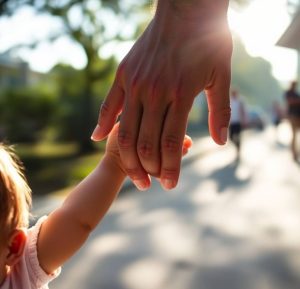
Children need physical affection. A hug when they fall. A soft hand on the head. A warm “I’m proud of you” whispered in their ear.

Without these moments, children learn to question their place in the world.

They stop reaching out. They stop believing they are worth reaching for.

4. “One Day You’ll Thank Me”: The Myth of Tough Love

Many adults defend harsh parenting by saying, “It made me stronger.” But often, what it really made them is numb. Emotionally distant. Struggling to connect. Unable to express love or receive it without guilt.

Children don’t need to be hardened. They need to be held.

Yes, discipline matters. But without empathy, it becomes control. Without love, it becomes fear. And fear-based obedience is not the same as understanding.

5. What Children Truly Need (It’s Simpler Than You Think)

  • Gentle eyes that look at them with admiration
  • Hugs when they stumble, not lectures
  • Someone who listens without interrupting
  • Space to fail without being shamed
  • Encouragement that celebrates effort, not just outcome

Children don’t remember the toys. They remember how you made them feel.

6. A Wake-Up Call for All of Us

If you’re a parent, guardian, teacher, or future mom or dad—this is your moment.

If your child is still small enough to want your hug, your hand, your attention—you still have time to change the story.

Because one day, your child will grow up and say one of two things:

  • “I was always afraid of disappointing them.”
  • Or: “I always knew I was loved, no matter what.”

Which one do you want to hear?

Conclusion: The Legacy of Love

Loving a child the right way isn’t about luxury or perfection. It’s about presence. It’s about connection. It’s about showing up, even when you’re tired. It’s about speaking gently, even when you’re frustrated. It’s about remembering that every child carries your words like seeds—and one day, those seeds bloom into the way they speak to themselves.

Hug your child today. Say “I love you” for no reason. Listen when they speak.

Because one day, they’ll look back and say:

“I’m happy. Because I know I was loved.”

And that, my dear friends, is the greatest success you could ever have.

Keywords: how to love your child the right way, emotional neglect, conditional parenting, parenting advice, effects of childhood emotional abuse, how to raise emotionally healthy children

A Letter From Grandpa Eli: “To the Ones Who Learned to Survive When They Should’ve Been Loved”

My dear children—no matter your age,
Whether you are six or sixty, I want to tell you something straight from this old heart of mine:

What happened to you wasn’t your fault.
And it’s not too late for what comes next to be different.

You were hurt in the silence, so let me speak into that silence now. Gently. One soul at a time.

🕯 To the child who hides in closets and wonders if anyone would notice them missing:

I see you. You are not invisible because you’re small. You’re not forgettable because you’re quiet. You were never supposed to raise yourself in a house full of people.

You deserve to be fed with love, not just food. You deserve to be heard the first time—not the fifteenth.

The fact that they didn’t show up for you does not mean you didn’t deserve someone who would.

You still do. You always did.

🧱 To the one who became a protector far too young, guarding a sibling while hiding bruises of your own:

You shouldn’t have to play the role of both child and shield. It’s not weakness to say you’re scared. It’s truth. And truth is where healing begins.

You are incredibly brave. But brave children still deserve to be children.

There are people in this world who won’t take you apart—they’ll help build something safe around you. Let them in. Let them help. You don’t have to carry all of this alone anymore.

💔 To the little one who clutches a doll at night and asks the moon to stay:

You weren’t left behind because you were bad. You weren’t ignored because you were unlovable. You were never the problem.

Some adults are too broken to give what they never had. That does not mean you’re hard to love. It means you’re still waiting for someone who knows how to love.

And that someone will come. Keep holding on.

🪞 To the teenager who learned to hate their own reflection because someone else taught them shame:

They were wrong.

Your softness was not weakness. Your face was not something to hide. Your voice was not too much. You were never “less than.”

The mirror they used to punish you can become a mirror that reflects your power. When you look again—look with kindness. Look for the one who survived.

Because that is someone worth seeing. Again and again.

🧸 To the quiet child who always walks at the back of the line, hoping someone will choose them:

You don’t need to be louder or better or neater to earn love.

You were born worthy.

You weren’t born to be tolerated. You were born to be picked—not for convenience, but because someone wanted to.

You may have been handed pain first, but that doesn’t mean healing isn’t waiting for you next.

🧽 To the one who scrubs the sink at 2 AM, believing perfection is the price of love:

My dear, you were taught a terrible lie.

You don’t have to earn rest. You don’t need to bleach yourself to be clean. You are already enough—even with dishes in the sink and tears on your cheeks.

A little mess doesn’t mean you’re bad. It means you’re alive.

Leave the sponge for a moment. Sit. Breathe. You’re safe now.

🧳 To the one who kept a suitcase by the door for decades, ready for the day someone leaves again:

You didn’t deserve to be abandoned. And you don’t have to live every day preparing to be hurt again.

You are allowed to unpack. You are allowed to buy a couch, hang pictures, keep a pet, plant flowers—anything that says I live here.

You are not a guest in your own life. You belong.

👁 To the soul who avoided mirrors for years, afraid of the shame they’d been taught to carry:

You weren’t weak because you cried. You weren’t broken because you were sensitive. You were a child.

And the child you were didn’t deserve punishment. He deserved gentleness.

When you looked into the mirror and finally said, “You didn’t deserve that,” you reclaimed your power.

Keep looking.
Keep healing.
You’re still here—and that’s the most beautiful thing I’ve seen.

🪶 Final Words From Grandpa Eli

To everyone reading, crying, remembering, or still trying:

Your story may have started in survival.
But it doesn’t have to end there.

You are not the names they called you.
You are not the silence they drowned you in.
You are not the reflection they shattered.

You are the one who stayed.
You are the one who’s still here.
You are the one who gets to write the rest of your story—with gentleness, with truth, with love.

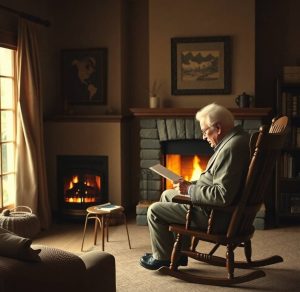
And I’ll be here in my chair, as always—rooting for you.

Forever and always,
Grandpa Eli
For the child in every grown-up. For the grown-up in every child.

A Letter From Grandpa Eli: “To Every Child Who’s Been Hurt and Every Adult Still Carrying That Child Inside”

My dear little ones,

If you’re reading this and your heart feels too heavy for your chest—if the world has felt like a storm and no one ever showed up with an umbrella—I want you to know:
You are not alone.

I’ve been sitting by the fire for many years, listening to stories. Some are joyful. Most are broken. And yet—somehow—those broken stories become bridges. They lead to healing, if we walk them carefully, and if we’re brave enough not to walk them alone.

Let me talk to each of you for a moment.

To Tyler, hiding in the library because home isn’t safe:
You are not the reason your father is angry. You are not broken. You are a brave boy surviving something no child ever should. That red balloon you once imagined letting go? One day, you’ll hold joy in your hands again—and this time, no one will pop it.

To Naomi, who stopped praying because God felt silent:
Sweet girl, I don’t blame you. Even grownups struggle with questions that have no answers. But hear this: your pain is real. And just because your dad wears a tie on Sundays doesn’t mean he’s holy. Truth doesn’t wear a mask forever. You will rise beyond this. And faith? It might not come from the sky, but it often begins in people—strangers who choose to care. Like you, reading this now.

To Marcus, who sits in silence, afraid he feels nothing:
Numbness isn’t failure, son. It’s your body’s way of saying it’s been too much for too long. But I promise you, beneath that numbness is a beating heart that wants to feel again. And you will. Let the numbness melt slowly—one safe person at a time, one truth at a time. Start here: you matter.

To Lily, who only feels safe at school:
I see you, little star. The way you hide behind your smile. The way you tiptoe through your house like a ghost. You didn’t deserve to learn fear instead of trust. But one day, someone will open their arms, and you’ll run—not because you’re scared, but because you’re finally free.

To Ben, who hit because he didn’t know what else to do:
Oh, my boy. The fact that it scared you afterward means you’re not like him. You felt power—but you also felt remorse. That’s your soul, still tender. Still alive. You haven’t lost your way. Let’s walk back together. You are not doomed. You are at a crossroad—and love, real love, will show you the right path.

🌱 Now, to you—dear reader—yes, you:

Maybe you’re not a child anymore. But maybe you carry one inside—still wounded, still waiting for someone to come back and say,

“It shouldn’t have been like that. I’m sorry. It wasn’t your fault.”

Maybe you see your own child struggling—and you don’t know what to say. Or maybe you’ve been the one causing pain, and it’s eating you alive.

Here’s what I’ve learned in my years as a professor of human behavior, and a grandfather to many broken hearts:

🛠 Healing begins with three things:

  1. Being Seen.
    Every child needs one adult to notice—not just their behavior, but their pain. Be that adult.
  2. Being Believed.
    When a child tells you something hurts—believe them. Their story might be quiet. But their bruises? They aren’t always on the skin.
  3. Being Loved.
    Not the kind of love that says “Be perfect.”
    But the kind that says:
    “Even in your mess, I’m staying.”

🧭 What Can You Do?

  • If you’re a child in pain: Speak. Write. Scream if you must. Keep trying until someone listens. You are not meant to carry this alone.
  • If you’re an adult with childhood scars: You survived. That’s no small thing. But surviving isn’t the same as healing. Find a therapist. Join a support group. Start where it hurts the most. Then build outward.
  • If you’re someone on the outside: Don’t say “It’s not my business.” It is. The children of this world are all our business.

💖 And remember this:

You don’t have to become who hurt you.
You don’t have to carry what they dropped on your shoulders.
You don’t have to finish the story the way it began.

You can be the ending no one saw coming.

I’ll be right here. In the rocking chair. Listening. Cheering. And always believing in you.

With all my heart,
Grandpa Eli
(Your quiet friend who always shows up when you need someone to sit beside you)