Breaking the Inheritance of Pain

Breaking the Inheritance of Pain
—from Grandpa Eli

Not all prisons have walls.

Some are inherited.

Some are stitched quietly into us by those who raised us—without words, without conscious intent—just a slow, steady weaving of fear, control, and silence, passed from one generation to the next like a family heirloom.

You may look in the mirror and see your father’s anger reflected in your own eyes.
>
You may hear your mother’s sadness echoing in your tone of voice.
>
You may find yourself repeating rules you never agreed to, living a life shaped by fears that were never yours.

This is the invisible inheritance of wounded parenting.

It is not your fault. But here is the hard truth: if you do not break it, you will pass it on.

We carry what we don’t heal.
We repeat what we don’t question.
And we become what we don’t confront.

The first step toward freedom is recognition—not of blame, but of pattern.

We must learn to name what we have mistaken for personality: the shame that isn’t ours, the silence that was forced on us, the belief that we must earn love to deserve it.

And once we name it, we can begin to disown it.

To say: This ends here.
>
To burn the old rulebook—one that taught us to stay small, to stay quiet, to survive without thriving.
>
To write new laws for our own souls: I am allowed to feel. I am allowed to be free.

Breaking free doesn’t always look dramatic.

Sometimes, it looks like saying no without apology.
>
Sometimes, it looks like resting—even when the voice in your head says you haven’t earned it.
>
Sometimes, it looks like choosing joy without waiting for permission.

It is not easy. It is not instant. But it is possible.

And no—you do not need to wait until you feel “ready.”
You may never feel ready. But you can still begin.
Not perfectly. Just honestly.

Because the truth is this:

They may have built the walls.
But you, dear one, can build the door.

And once you do—you don’t just walk through it for yourself.
You walk through it for everyone who comes after you.

This is how the cycle ends.
This is how the new chapter begins.

You Hold the Pen Now

You Hold the Pen Now
—from Grandpa Eli

There comes a moment in every wounded life when the past begins to blur, not because the pain has faded, but because the mind grows weary of replaying the same unanswered questions.

For many, childhood was not a place of safety but a season of survival. The home, which should have been a shelter, became a battlefield. Affection was conditional. Praise was rare. Silence was heavy. And love, if it existed at all, came at a price—obedience, perfection, invisibility.

As children, we adjusted. We learned to read the room before we read books. We became skilled in the art of shrinking—our voices, our needs, our very selves—because smallness, we were told without words, was safer.

These lessons sink deep.

Even as adults, we carry them. They follow us into relationships, into workplaces, into the private chambers of our self-worth. We perform rather than connect. We apologize for taking up space. We mistrust joy. We fear softness. We question our right to be loved without earning it.

And yet, despite all of it, there remains a truth that waits patiently for our permission to rise.

We did not write the beginning. But we hold the pen now.

This is where the narrative begins to shift.

The pain of the past is not invalidated by this truth. Rather, it is honored. What happened mattered. What was missing mattered. But if we are to grow—if we are to live instead of merely survive—we must recognize that healing is not about erasing the story; it is about reclaiming authorship.

Letting go of blame is not denial. It is a declaration of freedom.

We are no longer confined to the margins written by those who misunderstood us, feared us, or failed to love us. We are not bound to repeat the cycles they couldn’t break. We are not forever cast as the fragile character in someone else’s unfinished script.

To hold the pen is to begin again—not because we forget the past, but because we refuse to let it define what comes next.

Growth may be quiet. It may look like saying “no” without guilt. It may look like resting when your childhood told you rest was laziness. It may look like speaking kindly to the mirror, rewriting the language your parents never learned.

It may begin slowly. But it begins with you.

You hold the pen now.

Write with courage. Write with compassion. Write the story you needed as a child—and still deserve as an adult.

And above all, write like your life depends on it.

Because in many ways, it does.

The Love I Never Felt: How Emotional Neglect Shapes Our Adult Lives

By Grandpa Eli

“But I Had a Roof Over My Head…”

Not every child who suffers leaves with visible scars.

Some grow up in homes with dinner on the table. Clothes in the closet. Even smiles in family photos.

But something important was missing.
Something silent. Invisible. And just as damaging as a slap:

Emotional presence. Warmth. Connection.

This, my dear one, is what we call emotional neglect — and it’s far more common than most people realize.

In today’s blog, we’ll walk through:

  • What emotional neglect really is.

  • Why it’s so often misunderstood.

  • How it leaves lifelong marks on our sense of self.

  • And most importantly — how we can begin to heal.

What Is Emotional Neglect?

Emotional neglect happens when a child’s emotional needs are consistently ignored, dismissed, or unacknowledged.

It’s not always malicious.
In fact, many parents who neglect emotionally are loving in their own way — they simply never learned how to be emotionally available.

But to a child, the result is the same:

  • Feeling invisible.

  • Feeling unworthy of love.

  • Learning to suppress emotions just to survive.

A child’s logic is heartbreakingly simple:

“If no one sees me… maybe I’m not worth seeing.”

“They Were Good Parents. I Must Be the Problem.”

This is one of the cruelest traps emotional neglect sets.

When a parent isn’t violent or overtly abusive, the child assumes the fault must be within themselves.

“They fed me. Gave me clothes. So why do I feel so empty?”
“Maybe I’m too sensitive. Maybe I just ask for too much.”

These beliefs become core wounds — deep-rooted stories that follow us into adulthood.

And they shape everything.

How Childhood Neglect Follows Us Into Adulthood

You might not even realize it’s happening.

But emotional neglect can show up in adulthood as:

  • Chronic low self-worth

  • Fear of vulnerability

  • Difficulty identifying or expressing emotions

  • Being “overly independent”

  • People-pleasing to earn love

  • Feeling numb, disconnected, or emotionally flat

  • Attracting emotionally unavailable partners

  • A deep fear of being “too much”

Sound familiar?

That’s not because something’s wrong with you.
It’s because your inner child is still waiting to be seen.

The Three Most Common Myths About Emotional Neglect

Myth 1: “If I wasn’t hit or screamed at, I wasn’t abused.”
Truth: Abuse isn’t just what’s done to you. It’s also what was withheld from you.

Myth 2: “They did their best, so I shouldn’t feel hurt.”
Truth: Compassion for their struggle doesn’t erase your pain. Both can exist.

Myth 3: “I should be over it by now.”
Truth: Time doesn’t heal what’s never been acknowledged.

How We Begin To Heal

🧓 Let me tell you something important, dear one:

“You didn’t make it up.”
“You weren’t too needy.”
“You just needed what every child needs: love, attention, and to be seen.”

Healing from emotional neglect is possible. But it begins with naming the wound.
Let’s explore some healing steps together:

Step 1: Acknowledge What Was Missing

Write it down. Say it aloud. Tell a trusted friend or therapist.

“I wasn’t hugged.”
“No one asked how I felt.”
“They never said they were proud of me.”

Validation isn’t pity. It’s power.

Step 2: Stop Minimizing Your Pain

“It could’ve been worse”
“At least they stayed”

These thoughts don’t serve your healing.
Your pain deserves space — no matter what others had it “worse.”

Step 3: Reconnect with Your Inner Child

That little one inside you is still waiting to be seen.

  • Talk to them.

  • Write to them.

  • Be the parent to yourself that you never had.

Step 4: Seek Safe, Supportive Relationships

Find people who make you feel seen. Heard. Valued.
Whether through therapy, support groups, or soulful friendships — connection heals what neglect created.

Step 5: Redefine Love and Worth

Love is not something you have to earn.
Your worth is not tied to your achievements or usefulness.
You are lovable because you exist.

Let that sink in. Again and again. Until it becomes truth.

Final Words from Grandpa Eli

Dear one, emotional neglect is invisible to the world — but deeply felt by the soul.

It wasn’t your fault.
You didn’t imagine it.
And you’re not alone.

There’s nothing wrong with you.
You’re healing.

And if you’re still searching for that warm voice to tell you that you matter —
🧓 Let me be that voice:

You matter.
I see you.
And I’m proud of the person you’re becoming.

With all my heart,
~ Grandpa Eli


I Tucked Her In at Night: A Story of Childhood Role Reversal

“I Tucked Her In at Night”

From: A child who had to parent their own parent

Dear Grandpa Eli,

I don’t really remember being little.

I mean, I know I was — there are pictures of me in footie pajamas, holding a stuffed bear with one eye. But even then, I remember watching over Mom. Making sure she didn’t cry too long. Or sleep too long. Or drink too much.

Other kids got tucked in at night.
But I was the one doing the tucking.

I’d help her to bed after she passed out on the couch. I’d take off her shoes, pull a blanket over her shoulders. Once, I even sang her a lullaby. I was five.

People say kids are resilient. But I think sometimes we’re just… good at hiding.
Good at pretending we’re not scared.
Good at smiling for teachers and saying, “I’m fine,” when no one packed our lunch again.

Every morning before school, I checked to see if she was breathing. That was my routine. That — and pouring cereal with water because the milk was gone.

When other kids asked what my mom did for work, I made things up. “She’s a nurse,” I said once. She wasn’t. She didn’t leave the house for days. Except to buy wine.

When she was sober, she could be magic.
She’d braid my hair and call me “her little sunshine.”
But when the bottle came out, the sunshine disappeared.

Sometimes she’d cry and say, “You’re the only thing keeping me going.”
I didn’t know if that was supposed to be a compliment.
It felt like a cage.

One time, I told the school counselor that I felt tired all the time. She said maybe I needed to sleep more. I wanted to say:
“I sleep just fine. It’s waking up to this that’s exhausting.”

But I didn’t.
Because if someone found out, I was afraid they’d take me away.
And as broken as Mom was… she was still mine.

Now I’m twelve. I still flinch when someone knocks on the door.
I still freeze when someone yells.
I still feel guilty when I rest — like I should be checking on someone, fixing something, apologizing for something I didn’t even do.

Grandpa Eli,
Is it okay if I say I’m tired?
Even if I don’t look like it on the outside?

Is it okay to be a kid…
Even if I never learned how?

Sometimes I look in the mirror and try to see me — just me — not the caretaker. Not the peacekeeper. Not the one keeping everyone from falling apart.

Do you think she ever saw me?

Do you?


Reply from Grandpa Eli

Oh my precious one,

I see you.

I see the five-year-old with tiny hands pulling blankets over a grown woman. I see the tired eyes behind the “I’m fine.” I see the strength it took to become a parent before you even lost your baby teeth.

And yes — I see you. Not the caretaker. Not the peacemaker.
You. The child who deserved to be held, not to be holding everything together.

Sweetheart, what happened to you was not okay.

You should never have had to carry so much. You should have been the one being sung to, not the one whispering lullabies to a woman drowning in her pain. You should have been eating warm dinners, not cereal with water. You should have had one job: to be a child.

But instead, you were handed a silent contract — to become her hope, her helper, her emotional anchor. And no one asked if your tiny heart could carry all that weight.

You asked if it’s okay to be tired.
Let me be the one to give you the answer your soul has waited years to hear:

Yes. It is okay to be tired.
It is okay to rest.
It is okay to cry.
It is okay to not be okay.

You don’t have to earn rest. You don’t have to apologize for your exhaustion. You don’t have to stay in “alert mode” just because love once depended on it.

You are allowed to lay down the weight.

And you know what else?

You don’t have to save anyone to be worthy of being saved.

I want you to hear this: You were never meant to be her solution.
That was never your job. Not then. Not now.

You’re twelve, and yet you speak like someone who’s lived a hundred years. But buried beneath that armor is still a child. A child who wants to laugh freely. To play. To mess up without fear. To eat cereal with milk and not count every drop.

That child still lives inside you — and they’re waiting.

Let them out, bit by bit. Let them be loud. Let them rest. Let them be seen.
Because I see them. And I love them. Just as they are.

You are not invisible to me.
You are unforgettable.

And I am so, so proud of you.

With the gentlest arms and the warmest lap,
— Grandpa Eli

They Only Touched Me When They Were Angry

From: A girl who never felt safe in her own home

Dear Grandpa Eli,

I’m eleven. But some days I feel like I’m fifty.

I know that sounds weird. But when you grow up the way I did, you don’t get to stay a kid for long.

At home, no one ever held my hand unless it was to pull me away roughly. No one ever kissed my forehead goodnight. They only touched me when they were angry.

I remember once, in second grade, I fell on the playground. I scraped my knee really bad. My friend’s mom came to help, and she gently brushed the dirt from my skin. Just that little touch made me cry harder than the fall. I think it was the first time someone touched me with kindness.

At home, kindness didn’t exist.

Dad drank. Mom yelled. The house always smelled like burnt food and something worse I could never name. I learned to tiptoe, to whisper, to disappear.

I got really good at reading faces. I could tell when the storm was coming — in the way Dad’s jaw clenched, or how Mom slammed the cupboard just a little too hard. I would hide in my closet, with my pillow over my ears, pretending I was somewhere else. Somewhere safe. Somewhere warm.

Sometimes, I’d imagine you there, Grandpa Eli.

I don’t know why. Maybe because your stories feel like a hug I never got.

Maybe because you sound like the kind of grown-up who would have noticed that my smile was fake. That my eyes were always watching for danger.

I wish someone had asked me, “Are you okay?”

I wish someone had said, “You don’t deserve this.”

Because deep down, Grandpa… I thought I did.

I thought if I was better — quieter, more helpful, less needy — they would stop yelling. That maybe they would hug me instead of hitting. That maybe I could earn love.

But I never did.

Now, when someone gets close, even in a good way, I flinch.

My teacher tried to put a hand on my shoulder when I answered a question right — and I jerked away.

She looked surprised. I said I was fine.

But I wasn’t.

I still don’t know what love feels like.

I only know what fear feels like.

Is there a way back, Grandpa Eli?

Can a girl like me — who’s always been afraid of touch — ever learn to feel safe in her own skin?

Please write back.

Even if it’s just to say I’m not broken forever.

From sad girl – E.M

Reply from Grandpa Eli

My sweet girl,

I hear you.

I read every word of your letter with tears behind my old eyes and an ache in my chest that only a child’s pain can bring. And even though I cannot reach through this page to hold your hand, I need you to know something — something so important that I want you to read it slowly and let it sink deep, like sun into soil:

You are not broken.
You never were.

The people who should have wrapped you in love, who should have made you feel safe, didn’t know how. Not because you were unlovable — oh no, dear — but because they were lost. That was never your fault.

You were just a little girl who needed soft arms and kind voices… and instead, you got fear. You learned to disappear not because you were invisible — but because you were surviving. You became an expert at reading danger, because no one taught you how to receive peace.

That little girl in the closet with her pillow over her ears?
She was so brave.
And she’s still inside you, waiting to be held.

You asked me if there’s a way back.
There is.

The way back begins not with touch, but with truth.
And here’s one I want you to carry in your pocket like a warm stone:

“You never had to earn love.
You were born deserving it.”

One day — maybe not today, maybe not for a while — someone will reach for your hand, not to hurt you, but to hold it gently. And your body might flinch. That’s okay. Healing takes time. Trust takes time. But that little girl who learned to hide? She can learn to step into the light.

And I’ll be here, every step. Listening. Cheering you on.

If no one’s ever said it before, let Grandpa Eli be the first:

“I see you.
I believe you.
And I love the strong, sensitive, surviving soul that you are.”

You are not the anger they poured onto you.
You are not the bruises they left behind.
You are not the silence that swallowed your voice.

You, dear one, are hope with a heartbeat.

With all my love and steady arms,
— Grandpa Eli

A Neglected Childhood and the False Belief in Personal Responsibility

My dear one,

Being quietly abandoned—without a word, without a wound anyone can see—is one of the deepest hurts a child can carry. A child can survive on food, water, and shelter. But to thrive, to truly grow into a happy human being… love is not optional. It’s essential.

When a child is deprived of love, it’s not just sadness that follows them into adulthood—it’s confusion, mistrust, and often, a very quiet kind of loneliness.

Joy can feel far away. Trusting kindness becomes a challenge. Empathy, that precious thread that connects us to others, struggles to grow. Relationships become distant, and the world begins to feel like a cold and uncertain place.

Neglect may not leave bruises on the skin, but it leaves deep marks on the soul.

But listen closely, child: there is a way forward.

You can still find joy. You can still discover what it feels like to be loved, truly and freely. You can come to know your worth—not because of what you do or how perfect you try to be—but simply because you exist.

The first step on that healing path is this: let go of the false belief that you were abandoned because you did something wrong.

So many people, now grown, still carry a whisper inside: “It must have been me. I wasn’t enough. That’s why they didn’t love me.”

Even as adults, they may understand that no child deserves neglect. They may know it wasn’t their fault. But the feelings from long ago still linger. Because when we were young, we didn’t understand a broken parent or a distracted caregiver. All we saw was the absence of love—and our little hearts made up the only story we could: “If I can be good enough, maybe they’ll stay.”

But when that love never came, we didn’t stop trying—we just turned the blame inward.

That is a child’s logic, my dear. And it makes perfect sense—if you’re five years old, lost, and craving warmth. But you are older now. And it’s time to see the truth more clearly.

You didn’t fail to earn their love.

They failed to give it.

That’s not your fault.

And the beliefs that took root back then? They don’t go away on their own. They grow alongside us. They shape our choices, our relationships, our sense of worth. Unless we stop, look them in the eye, and say:

“I see you. I know why you’re here. But you are not the truth.”

Healing begins when we understand why we believed the lies—and gently, over time, choose to let them go.

And when we do?

A new door opens. A door to a life where you no longer carry guilt like a second skin. A life where you can see yourself—not as broken, but as brave. As someone who made it through without the love they deserved, and is still learning to live with an open heart.

So if you, my dear child, were neglected…

Grandpa Eli wants to tell you this:

Please don’t walk this road alone. Find someone who understands—someone who can remind you, again and again, that you are not to blame. Because when you can finally lay that burden down… oh, how light your steps will be.

And how free your life will feel.

The Closet We Never Outgrow: How Childhood Fear Teaches Us to Stay Silent—And What It Takes to Speak Again

For some people, closets are for coats.
For others, they’re for secrets.
And for many who’ve lived through childhood trauma, they were a place to hide from storms that had names like Dad or Mom.

This is the story of Maria—an HR assistant, a “model employee,” a grown woman—who found herself frozen in the supply closet of her office one afternoon.
Not because of a fire. Not because of a panic attack.
But because the air smelled like old wood and paper.

And that smell transported her 25 years back—into the tiny hallway closet where she once hid from violence, believing that silence meant survival.

This isn’t just her story.
It’s for anyone who learned too young that being invisible felt safer than being loved.

When the Closet Becomes a Refuge

Maria was six the first time she was told to hide.
Her mother whispered, “Go, baby, go,” as the front door slammed and her stepfather’s drunken footsteps stomped down the hall.

Maria ran.

She knew the way.
Down the hallway. Past the bathroom. Into the coat closet—wedged between her mother’s church dress and an old vacuum.

She waited there in the dark, holding her breath while screams and crashes shook the floorboards.
Sometimes for minutes.
Sometimes for hours.

In that space of mothballs and silence, Maria made a home.
She imagined her own version of safety: a mother who didn’t cry, a man who didn’t rage, a world that didn’t shatter every Saturday night.

But closets weren’t magical. They were just wooden tombs that taught her how to disappear.

How Childhood Teaches Us Silence Is Safer

As Maria grew older, she never talked about the closet.

She didn’t tell friends.
She didn’t mention it in college essays.
She didn’t cry when her therapist asked about her childhood.

She just smiled.
Told people she “grew up fast.”
That she was “independent.”

And she was.

She graduated early. Held down two jobs.
Worked her way into HR leadership before 30.
She was praised for being “calm under pressure,” “unshakable,” “professional.”

No one saw that beneath the professionalism was a girl still hiding.

Because Maria learned young that speaking up had consequences.
That asking for too much made people leave.
That expressing pain made you the problem.

So she stayed quiet.
Even when coworkers interrupted her in meetings.
Even when her partner mocked her weight in public.
Even when she felt the need to scream.

The Supply Closet Breakdown

It wasn’t a dramatic moment.
Just another Tuesday.
She was gathering office supplies before a training when she stepped into the closet and closed the door behind her.

And then it hit her.
The scent. The stillness. The shape of the doorknob.
It wasn’t a closet anymore—it was a portal.

She couldn’t breathe.

Her body remembered what her brain had buried:
The screams.
The pounding.
The silence that followed.

Maria dropped the clipboard and sank to the floor, shaking.

But this time, she wasn’t six.
And she wasn’t alone.

When Another Child Helps You Meet Your Own

Just the day before, a new intern had walked into her office.
Nervous. Apologetic.
He’d made a mistake on a document. His voice trembled.
When Maria raised her voice—gently—he flinched.

It stopped her cold.

Because she knew that flinch.
She was that flinch.

So she sat him down.
Handed him a glass of water.
And said something she’d never said out loud—not even to herself:

“It’s okay.
You’re safe now.
Nobody’s going to hurt you here.”

Those words came back to her now, sitting on the floor of the supply closet.
And they weren’t for the intern anymore.
They were for her.

Reclaiming the Voice You Buried to Survive

Maria didn’t need to shout.
She didn’t need a confrontation or a grand apology.
She just needed to feel what she had once been forced to silence.

She whispered:

“I’m not hiding anymore.
I was never bad.
I was just scared.”

It wasn’t a lightning bolt.
But it was a beginning.

That afternoon, she told her manager she wanted to lead next quarter’s diversity training.
That night, she told her partner they needed to talk—about respect, about boundaries, about whether love should feel like walking on eggshells.

And the next morning?
She walked into the supply closet, grabbed what she needed, and walked out.

Just like that.

No panic.
No past chasing her.
Just a woman with a purpose—no longer hiding between the coats.

What the Closet Represents in So Many of Our Lives

Psychologically, the “closet” isn’t always physical.
It can be:

  • The fake smile at the family table
  • The years of people-pleasing
  • The way we apologize before we even speak
  • The unspoken rule that “nice” girls and boys don’t make noise

We carry our closets with us.

We shrink ourselves in relationships.
We silence our needs in workplaces.
We ignore red flags because we were taught love is earned, not given.

But the truth is this:

You don’t have to hide anymore.

How to Begin Speaking Again

You may not be ready to shout.
You may not even be ready to whisper.

But here are small ways to begin unlocking the door:

🧩 1. Notice the Flinch

Where in life are you shrinking?
Who do you fear upsetting—and why?

🪞 2. Speak Kindly to the Child Inside

Try saying:

“I’m sorry you had to hide.”
“You didn’t deserve the fear.”
“You’re allowed to speak now.”

✍️ 3. Write the Letter You Never Sent

To your younger self. To your abuser. To the world.
Even if you never send it—write it. Name what was never named.

🗣️ 4. Say One Thing Today

Tell a friend how you really feel.
Set a boundary.
Even if your voice shakes.

Conclusion: From Supply Closet to Safe Space

Maria’s journey didn’t end in that closet.
It began there.

Because healing doesn’t always start in a therapist’s office.
Sometimes, it starts with the courage to enter the room you once feared—and leave it with your head high.

So if you’re still hiding, still quiet, still apologizing for having needs—this is for you:

You were never the problem.
You were never too much.
You were just a child in a world that couldn’t love you the way you deserved.

But now?
Now you get to be the one who opens the door.

And walks out.

💬 Let’s Talk

Have you ever carried your “closet” into adulthood?
Are you still learning how to speak, set boundaries, and take up space?

Drop a 🧥 in the comments if you’re learning to live outside the silence.
Or share this with someone who needs to hear:

“You don’t have to hide anymore. You never did.”

A Letter from Grandpa Eli

To the Child Inside You: Forgive Yourself

My dear,

If you’re reading this, it means you’re carrying something heavy. A weight not made of iron or stone, but of guilt… of memories… of blame you should never have held in your little hands.

I want to talk to that child inside you. The one who once wondered,
“Was it my fault?”
“Did I deserve this?”
“If only I had been better… quieter… stronger…”

Let me tell you a secret, whispered gently like the wind in the trees:
It was never your fault. Not even for a moment.

 This isn’t about forgiving them.This is about forgiving yourself.
This isn’t about forgiving them.
This is about forgiving yourself.

You were just a child. You didn’t choose the yelling. You didn’t cause the silence. You weren’t the reason they drank, or lashed out, or disappeared emotionally. The world got it upside down. And for too long, you’ve carried the burden of their brokenness on your innocent shoulders.

I know forgiveness is a complicated word. People often misunderstand it. They say, “You should forgive your abuser.” But I don’t believe you owe them anything.
This isn’t about forgiving them.

This is about forgiving yourself.

Forgive yourself for not knowing how to speak up.
Forgive yourself for trying so hard to please people who were impossible to please.
Forgive yourself for surviving in ways others may not understand—through silence, rebellion, perfectionism, or pretending everything was okay.

Forgive the child who simply wanted to be loved.

That child is still with you. And they are waiting—for your kindness, for your warmth, for your understanding.

So here’s what I want you to do today:

  1. Look in the mirror. Gently place your hand on your chest and say,
    “I forgive myself. I was just a child. I did nothing wrong.”
  2. Let go of the question “Why did this happen?” There may never be a satisfying answer. What matters more is: What will you do now to live free?
  3. Be the adult your younger self needed. Speak gently. Rest when you’re tired. Set boundaries. Celebrate small joys.

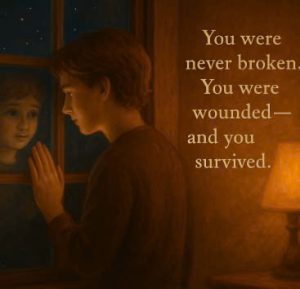
Dear one, you were never broken. You were wounded—but wounds can heal. Scars do not mean you’re damaged. They mean you survived.

You’re not alone anymore.

With warmth like a cup of cocoa in winter,
Grandpa Eli
🧡

The Day You Finally Said ‘Enough’

Keyword focus: break the cycle of abuse, take back your life

The Day You Finally Said ‘Enough’

There is a moment. It doesn’t always come with thunder or fanfare. Sometimes, it comes quietly—while brushing your teeth, folding laundry, or watching a stranger hold their child with tenderness you never received.

It comes like a whisper, but it roars through your chest.

“I can’t live like this anymore.”

That moment, dear one, is sacred. It’s the beginning of everything.

You stood up for yourself. Or set a boundary. Or made a call to a therapist. Or simply cried for the very first time for the child you used to be.

You Were Never Meant to Stay Silent Forever

For years, maybe decades, you lived in survival mode. You swallowed your voice. You minimized your pain. You convinced yourself it wasn’t that bad—or that maybe it was but there was nothing to be done.

You endured. You adapted. You wore masks and armor. You did what you had to do to make it through.

But inside, a quiet knowing always waited: This is not the life I was born for.

And one day, that knowing rose up.

You stood up for yourself. Or set a boundary. Or made a call to a therapist. Or simply cried for the very first time for the child you used to be.

That was the day you said: Enough.

Enough of the Shame

You decided you were tired of carrying shame that was never yours to begin with. Shame for being too sensitive. For not being “strong enough.” For what they did to you.

But none of that belongs to you.

That day, you said:

  • “I am not to blame.”
  • “I don’t need to keep proving my worth.”
  • “I’m allowed to exist exactly as I am.”

Enough of the Old Scripts

You saw how the past kept repeating itself. Maybe in your relationships. Maybe in the way you talked to yourself. Maybe in the way you disappeared to keep the peace.

But that day, you decided: The cycle stops with me.

You chose something different. Maybe not perfectly. Maybe not all at once. But you chose.

The Power of a Quiet Revolution

Not every rebellion is loud. Some begin with a whisper: “I matter.” Some begin with rest, with softness, with letting someone in. Some begin with choosing to believe you are lovable, even when everything in your past said otherwise.

That’s a revolution.

You started rewriting your life.

It Was Never Too Late

Maybe you were 17. Maybe you were 47. Maybe you were 72.

But the moment you said “enough,” your healing began.

You stopped waiting for someone else to save you. You became your own rescue.

You picked up the pen and reclaimed authorship of your story.

And no matter what came before, that is the chapter that changes everything.

Today Is Always a Good Day to Begin Again

If you haven’t had your “enough” moment yet, let this be it. Let this be the day you:

  • Set a boundary.
  • Say no.
  • Say yes.
  • Cry.
  • Begin.

The life you want is already reaching for you. The child you once were is cheering you on. The person you’re becoming is already proud.

Say it now: “Enough. I choose me.”


Forgiving the Past (Not the People Who Hurt You)

Keyword focus: forgiving the past, healing without forgiving abuser

Forgiving the Past (Not the People Who Hurt You)

Forgiveness is a complicated word, especially when it comes to childhood pain.

People say things like, “You’ll never be free until you forgive them.” But what if the people who hurt you never said sorry? What if they kept hurting you—or still are?

Here’s what I want you to know:

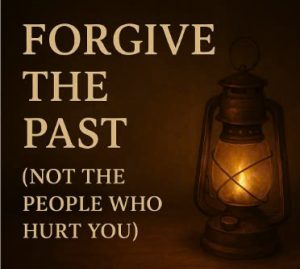
You don’t have to forgive the people who broke you. But you can forgive the past that tried to define you.

You don’t have to forgive the people who broke you. But you can forgive the past that tried to define you.

What Forgiveness Isn’t

Forgiveness isn’t forgetting. It isn’t pretending. It isn’t excusing. It isn’t letting anyone off the hook.

You do not need to say, “It’s okay.” Because it wasn’t.

Forgiveness is not a gift to the abuser. It’s a gift to yourself. And it starts when you shift the direction of your anger—from what happened then, to what you need now.

Releasing the Grip of Rage

Rage is sacred. It protects us. It tells us, “This is wrong.” But rage is also heavy. It’s exhausting. And if left unattended, it can harden into bitterness that poisons joy.

When you forgive the past—not the people, but the time—you are saying:

  • “I will not let these moments define the rest of my life.”
  • “I deserve peace, even if they never change.”

Forgiving the past means reclaiming your time, your voice, your worth.

Forgiveness As Freedom

You don’t need to tell them. You don’t need to see them. You don’t need to speak a word aloud.

You can whisper it into a letter you never send. You can cry it out in a room where no one watches. You can burn the old stories in a journal and write new ones.

What matters is this: that you stop letting them live rent-free in your head and heart.

You are allowed to say:

  • “You no longer have power here.”
  • “I choose me.”

The Example of Radical Forgiveness

There’s a story of a woman who lived through war. She watched her family die. When the dust settled, she didn’t seek revenge.

Someone asked her, “Don’t you want justice?”

She said, “I remember what they did. But I won’t let that night ruin the rest of my life.”

She didn’t forgive the killers. She forgave the night. She forgave history. So she could have a future.

Forgive the Night

You are not expected to forgive the hands that harmed you. But you can forgive the years that felt like shadows. You can forgive the birthdays no one celebrated. The report cards no one looked at. The words you needed but never heard.

Forgiveness of the past means you no longer punish yourself for things you couldn’t control.

It means you no longer rehearse the pain on a loop. It means peace is no longer postponed until someone else earns it.

Today, You Choose Peace

You’ve suffered enough. You’ve carried the weight long enough.

Forgiveness of the past is not forgetting what happened. It’s remembering without bleeding. It’s saying: “That was part of my story, but not the whole of it.”

It’s letting the light touch the places that hurt.

You are not weak for wanting peace. You are brave for choosing it.