How the Past Still Affects You Today

Dear heart. Let’s sit down for a moment, just you and me. If your childhood was filled with pain, neglect, or fear — even if no one ever called it “abuse” — it can still leave deep marks on the grown-up you’ve become. I want to help you see those marks not as signs of weakness, but as a map — a guide — that can show you the way forward.

🌧 How the Past Still Affects You Today

  1. Your relationships may feel confusing or painful.
    You might struggle to trust people. Maybe you pull away when someone gets too close. Or you find yourself pleasing others just to feel safe. That’s not weakness. That’s your inner child trying to protect you the only way they know how. 
  2. You may feel responsible for everything — even the things that hurt you.
    When love was conditional as a child (“Be quiet or else…” / “Why can’t you be like your brother?”), you may have learned to blame yourself. That can carry into adulthood as shame, guilt, or a sense of never being “good enough.” 
  3. You may react too strongly — or not at all.
    Little things can feel like big explosions. Or big things can make you shut down completely. Why? Because your brain was wired in a storm, and it’s still trying to survive it. 
  4. You might feel stuck, unmotivated, or like something’s “wrong” with you.
    That’s not laziness or failure. That’s grief. That’s exhaustion from carrying a backpack full of invisible pain. You’ve been surviving so long, you forgot what thriving feels like. 
  5. You might be scared of becoming like your parents.
    Many adults who were mistreated as kids live in fear of repeating the cycle — or they do repeat it without meaning to. Hurt people often hurt people… until someone brave chooses to heal. 

🛠 How to Begin Healing

I’ve walked beside many wounded children in grown-up bodies, and here’s the gentle truth I’ve learned:

Healing is possible. But it’s not magic.
It’s a path — and that path usually begins in three stages:

1. Understanding

Name what happened. Not to blame — but to see clearly.

“I was neglected.”
“I was afraid all the time.”
“No one hugged me when I cried.”

When we name the pain, we stop letting it hide.
And when it stops hiding, we can stop blaming ourselves for it.

2. Repair

This is where we gently untangle the mess the past made inside us.
It might look like therapy. Or journaling. Or safe friendships.
It might look like reading books or joining support groups.
It definitely looks like learning how to treat yourself with the care you never got.

3. Growth

This is the sweet stage — where you start living for you, not for fear.
You begin setting boundaries.
You begin laughing more.
You begin parenting your children — and your inner child — in ways that heal.

🌱 Remember, Dear One…

You didn’t choose the pain.
But you get to choose what happens next.

And if no one has ever said this to you, let Grandpa Eli be the first:

I’m proud of you.
Not because you’ve got it all figured out — but because you’re still here.
You survived what others wouldn’t understand. And now, you’re searching for light.
That makes you mighty.
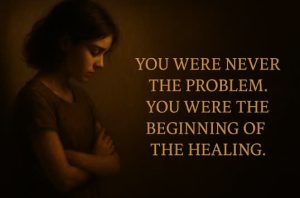
Healing a Wounded Childhood: The 3 Gentle Steps to Reclaim Your Life

By Grandpa Eli

Healing is not a destination, my dear—it’s a slow and sacred journey.
— Grandpa Eli

There are some wounds we can’t see with the eye.

They don’t show up on scans or leave visible scars.

But they live deep inside—
In the hearts of those who were once children,
Hurt not by strangers, but by the very people who were supposed to protect them.

If you are reading this and carrying childhood pain,
Grandpa Eli wants to tell you something tender, yet true:

You are not alone.
And you are not broken beyond repair.

Healing is possible.
But it doesn’t happen overnight.
There’s no magic wand, no instant remedy.

Instead, healing unfolds in three gentle stages
Like stepping stones across a dark river, leading you back home to yourself.

Let’s walk together through each of them.

🎯 Step 1: Understanding – Turning On the Light

Many people try to forget their childhood.
They bury the memories under layers of busyness, distractions, or numbness.
But the past has a way of whispering through our present.

It shows up in our relationships.
In the way we react when someone raises their voice.
In the way we flinch from love or chase perfection just to feel “enough.”

That’s why the first step in healing is understanding.

Not to blame.
Not to dwell in pain.
But to shine a light on the truth:

✨ What happened to you was not your fault.

You were a child.
You did not cause the neglect.
You did not deserve the control, the silence, the yelling, the emotional absence.

Naming the pain is powerful.
Abuse.
Neglect.
Shame.
Emotional abandonment.

When you start to see your childhood clearly, you stop blaming yourself.
And that, my dear, is when the healing begins.

💔 Step 2: Healing – Touching the Wounds with Compassion

This is the hardest part of the journey.
But it’s also the most necessary.

Healing means finally allowing yourself to feel.
To stop holding it all in.
To stop pretending it didn’t hurt.

You might cry.
You might rage.
You might fall silent for days.

That’s okay.

Let yourself write unsent letters to those who hurt you.
Talk to a kind therapist.
Join a support group.
Or sit alone with your hand over your heart, whispering,
“I’m sorry you had to go through that. I see you. I believe you.”

Some of us also need to forgive ourselves
For not being able to stop the abuse.
For coping the only way we knew how.
For surviving.

Tears that are allowed to fall in a safe place are not weakness.
They are release.
They are medicine.

💧 A single tear shed at the right time,
Can wash away a decade of buried pain.

🌱 Step 3: Growth – Choosing a New Way to Live

After we understand our pain…
After we sit with it and hold it gently like a child…

Something amazing begins to happen:

We grow.

We become rooted—not in trauma—but in truth.
We begin to make choices that come from freedom, not fear.

You begin to know who you are.
What you need.
And what you deserve.

You start setting boundaries.
You stop chasing people who don’t see your worth.
You stop trying to earn love—and simply receive it.

The past no longer controls you.
Yes, it’s still there.
But it no longer decides who you are or where you’re going.

This is what it means to be truly free.

Not perfect.
But whole.
And deeply, unapologetically alive.

🧭 Summary: The 3 Healing Steps in a Wounded Childhood

To revisit what we’ve walked through together, healing a difficult childhood often looks like this:

1. Understand

  • Recognize that what happened wasn’t your fault. 
  • Identify the types of harm you experienced. 
  • Stop blaming yourself. 

2. Heal

  • Feel your emotions instead of suppressing them. 
  • Talk, write, cry, breathe. 
  • Forgive your younger self for surviving the only way they could. 

3. Grow

  • Build a life based on truth, not trauma. 
  • Set boundaries. 
  • Love yourself like no one ever did. 

💌 A Note From Grandpa Eli

My dear,

Please don’t rush yourself.
This journey isn’t a race—it’s a return.
And even the smallest steps are steps forward.

There will be days you feel strong.
And days you feel like hiding under the covers.
Both are okay.
Both are part of the path.

And remember this:
You are never alone.

There are so many walking this road with you.
Including me—your Grandpa Eli.
Here with open arms.
Here to remind you, again and again:

✨ You are lovable.
You are worthy.
You are healing.

One gentle step at a time.

The Birthday Balloon: How Childhood Neglect Steals Celebration—And What It Means to Finally Celebrate Yourself

Some children blow out birthday candles surrounded by laughter.
Others stand at the window with a balloon in their hand, wishing someone—anyone—would remember them.

This is the story of Eliora, a mother who gave her son magical birthdays but never celebrated her own.
Not because she didn’t care about birthdays—but because hers had been a wound, not a joy.

And maybe, like Eliora, you’ve spent years throwing perfect parties for others while secretly believing you were never worth celebrating.

If that’s you—this story is for your inner child.

The Forgotten Birthday

Eliora was seven the first time she realized birthdays didn’t mean the same thing for every child.

Her friends at school had balloons, cupcakes, and songs.
She had silence.
A cracked plate of rice.
And her father’s voice barking from the living room, “Turn that crap off.”

She had saved up for weeks—skipping lunch, returning soda cans—just to buy herself a single red balloon from the corner store.

It was the only gift she got.

That night, after her mother slapped her for knocking over a glass of water, Eliora took the balloon to the front porch.
She let it go.
Watched it drift into the dark sky.
And whispered, “Maybe next year.”

But next year never came.

How Children Turn Pain Into Belief

The worst thing about childhood neglect isn’t just the moment you’re forgotten.
It’s the story you start to believe because of it.

Eliora didn’t just think her birthday was skipped.
She thought:

  • “I’m not special.”
  • “I take up too much space.”
  • “I should be grateful for what I get.”

And those beliefs didn’t stop when she turned 18.
They followed her into adulthood.

They showed up in every relationship where she settled for less.
They echoed every time someone forgot her birthday and she said, “Oh, it’s no big deal.”
They lingered every time she went out of her way to make someone else feel seen—while refusing to ask for anything in return.

Because deep down, she believed she wasn’t worth the balloon.

The Cycle of Overgiving

Eliora became the mom who went all out for her son’s birthdays.

Cupcakes shaped like astronauts.
Handmade banners.
Elaborate scavenger hunts.
Every year, she would stay up late, painting signs and blowing up balloons until her fingers hurt.

People praised her.
“You’re such a good mom.”
“He’s so lucky.”
“You’re amazing!”

And she smiled.
Because giving made her feel useful. Needed. Seen.

But every time someone asked, “What do you want for your birthday?”
She’d wave them off.
“Oh no, I don’t celebrate.”

Because when you’ve grown up invisible, being celebrated feels suspicious.
Like you have to earn it.
Like you’re about to be punished for taking up space.

The Balloon That Broke the Spell

This year, Eliora’s son turned seven.

She stayed up late, as always—baking, decorating, wrapping.
Around 2:00 AM, she was inflating the last balloon when it popped.
Loud. Sudden.

And in that sound, she went back in time.

Back to the slap.
Back to the silence.
Back to the red balloon floating alone in the sky.

She dropped the balloon pump and fell to her knees in the kitchen.
Shaking.
Crying.

Not because the balloon popped.

But because the child inside her finally felt safe enough to weep.

Reparenting Yourself in the Quiet Hours

That night, Eliora sat on the cold kitchen floor, remembering the girl who waited at the window with a balloon she bought for herself.

And something shifted.

She walked to the fridge, took out one of her son’s cupcakes, lit a candle, and whispered:

“Happy birthday, baby Eliora.
I’m sorry you were alone.
I’m sorry they forgot.
But I see you now.
And I will never forget you again.”

She blew out the candle—not to wish for something—but to release the lie that she didn’t matter.

Why It’s So Hard to Celebrate Ourselves

If you’ve ever:

  • Downplayed your birthday
  • Avoided attention
  • Felt uncomfortable receiving praise
  • Over-gifted to others but froze when it came to yourself

Then you might be carrying a story like Eliora’s.

The belief that you are not the kind of person people show up for.

That belief is a lie.

But it’s a lie that sticks until you actively replace it with truth.

5 Ways to Reclaim the Celebration You Deserve

🎁 1. Name What You Never Got

Write down everything you wish someone had said or done for you on your birthday as a child.

Then give it to yourself. Today. In any form you can.

🎂 2. Throw a Birthday Party for Your Inner Child

Even if it’s just you and a cupcake—mark the day. Celebrate that little one who made it through.

🎈 3. Let Others Celebrate You

When someone offers kindness, accept it.
Say yes.
You don’t have to earn it.

📸 4. Take the Photo

You’re not “too old” or “too awkward.”
You’re visible. You exist.
You belong in the frame.

🧡 5. Forgive Yourself for Believing You Were Unworthy

The child who felt forgotten didn’t do anything wrong.
She survived.
And that’s worth celebrating.

Conclusion: The Red Balloon Still Floats

You may not have had the birthday you deserved.
You may still cry when others cheer.
But the story doesn’t end with silence.

Like Eliora, you can look that forgotten child in the eyes and say:

“You matter.
I remember you.
And I will never let you be erased again.”

So buy the cake.
Light the candle.
Hold your own hand.
And let the red balloon rise—this time, not as a symbol of loneliness, but of freedom.

💬 Let’s Talk

Did you grow up feeling like your birthday didn’t matter?

Have you spent your adult life pouring into others while quietly hiding your own needs?

Drop a 🎂 in the comments if you’re ready to start celebrating yourself, one year at a time.
Or share this with someone who never had a birthday song sung to them, but still deserves a standing ovation.

The Day You Finally Said ‘Enough’

Keyword focus: break the cycle of abuse, take back your life

The Day You Finally Said ‘Enough’

There is a moment. It doesn’t always come with thunder or fanfare. Sometimes, it comes quietly—while brushing your teeth, folding laundry, or watching a stranger hold their child with tenderness you never received.

It comes like a whisper, but it roars through your chest.

“I can’t live like this anymore.”

That moment, dear one, is sacred. It’s the beginning of everything.

You stood up for yourself. Or set a boundary. Or made a call to a therapist. Or simply cried for the very first time for the child you used to be.

You Were Never Meant to Stay Silent Forever

For years, maybe decades, you lived in survival mode. You swallowed your voice. You minimized your pain. You convinced yourself it wasn’t that bad—or that maybe it was but there was nothing to be done.

You endured. You adapted. You wore masks and armor. You did what you had to do to make it through.

But inside, a quiet knowing always waited: This is not the life I was born for.

And one day, that knowing rose up.

You stood up for yourself. Or set a boundary. Or made a call to a therapist. Or simply cried for the very first time for the child you used to be.

That was the day you said: Enough.

Enough of the Shame

You decided you were tired of carrying shame that was never yours to begin with. Shame for being too sensitive. For not being “strong enough.” For what they did to you.

But none of that belongs to you.

That day, you said:

  • “I am not to blame.”
  • “I don’t need to keep proving my worth.”
  • “I’m allowed to exist exactly as I am.”

Enough of the Old Scripts

You saw how the past kept repeating itself. Maybe in your relationships. Maybe in the way you talked to yourself. Maybe in the way you disappeared to keep the peace.

But that day, you decided: The cycle stops with me.

You chose something different. Maybe not perfectly. Maybe not all at once. But you chose.

The Power of a Quiet Revolution

Not every rebellion is loud. Some begin with a whisper: “I matter.” Some begin with rest, with softness, with letting someone in. Some begin with choosing to believe you are lovable, even when everything in your past said otherwise.

That’s a revolution.

You started rewriting your life.

It Was Never Too Late

Maybe you were 17. Maybe you were 47. Maybe you were 72.

But the moment you said “enough,” your healing began.

You stopped waiting for someone else to save you. You became your own rescue.

You picked up the pen and reclaimed authorship of your story.

And no matter what came before, that is the chapter that changes everything.

Today Is Always a Good Day to Begin Again

If you haven’t had your “enough” moment yet, let this be it. Let this be the day you:

  • Set a boundary.
  • Say no.
  • Say yes.
  • Cry.
  • Begin.

The life you want is already reaching for you. The child you once were is cheering you on. The person you’re becoming is already proud.

Say it now: “Enough. I choose me.”