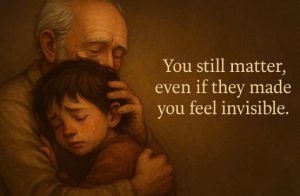
The “Not Now” That Becomes Never: How Everyday Rejections Break a Child’s Heart

The Words We Don’t Think Twice About

“Not now, sweetheart.” “In a minute.” “Maybe later.”

We say these things without thinking. We’re busy. We’re tired. We’re overwhelmed.

And while we forget these words in seconds, our children don’t.

They remember. And when “Not now” happens again… and again… and again — it becomes something more than a delay.

It becomes a pattern. A wound. A story.

“What I want doesn’t matter. I shouldn’t bother them. I’ll do it alone.”

Today, I want to share how these small, everyday rejections can slowly fracture a child’s heart — and how we can start healing that fracture before it becomes a chasm.

The Cumulative Power of Small Hurts

Most parents don’t think of themselves as rejecting their children.

But emotional rejection isn’t always cruel. It’s often unintentional. It happens in the micro-moments:

  • You’re doing dishes, and they want to show you something — “Not now.”
  • You’re answering work emails — “Later, okay?”
  • You’re finally relaxing, and they ask for a story — “Maybe tomorrow.”

Each instance seems harmless. But in a child’s world, every interaction is a bid for connection.

And when enough bids are declined, they stop making them.

Not to punish you — but to protect themselves.

Why This Hurts So Much

Children are wired to seek attention from their caregivers. It’s how they learn about the world, how they form identity, how they build self-worth.

But when those attempts are consistently dismissed, even gently, a child begins to internalize damaging beliefs:

  • I’m annoying.
  • My feelings are too much.
  • I only matter when I’m quiet.

They adapt. But that adaptation costs them dearly.

They grow into adults who:

  • Struggle to speak up
  • Apologize for having needs
  • Feel like a burden in relationships

All from the seeds planted in a hundred “Not nows.”

“But I Really Was Busy…”

Of course you were. Of course you are.

Life is full. Work, chores, bills, exhaustion.

This isn’t about blame — it’s about awareness.

Because here’s the truth:

Children don’t need us every minute. They just need to know they’re welcome when they come.

They need to trust that their needs won’t always be postponed.

And if we realize we’ve been putting them off too often, we can correct course. It’s never too late.

How to Repair When “Not Now” Has Become Too Common

1. Start by noticing.

Track how often you say “Not now.” Is it occasional? Or has it become automatic?

The first step is catching the pattern.

2. Offer a clear when — and keep it.

If you can’t engage now, say:

“Give me 10 minutes to finish this, then I’m all yours.”

Then follow through. That’s how trust is rebuilt.

3. Make space for small yeses.

Connection doesn’t need hours. Sometimes just two minutes of eye contact and genuine interest is enough to fill a child’s cup.

“Tell me about that picture you drew. I’d love to see it.”

4. Apologize and reconnect.

If you’ve been distant, don’t hide it. Address it.

“I know I’ve been saying ‘Not now’ a lot lately. I’m sorry. I want to be more present. Can we hang out today?”

You’d be amazed how forgiving children are — when they feel seen.

What Happens When You Start Saying Yes

When a child hears “Yes, I have time,” they don’t just feel happy. They feel:

  • Important
  • Valued
  • Safe

They learn:

“I matter, even when they’re busy.”

And they carry that belief forever — into friendships, love, career, parenting.

A well-timed “Yes” tells your child:

“You’re not an interruption. You’re my priority.”

Final Words from Grandpa Eli

If you’ve ever heard your child say:

“It’s okay, never mind…”

…stop and listen. That’s the sound of a heart closing a little.

But here’s the miracle: it doesn’t have to stay closed.

You can knock gently. Ask to come in. Say:

“Tell me what you wanted to say earlier. I’m listening now.”

And that moment — small as it may seem — becomes a turning point.

Remember:

You don’t need to be perfect. You just need to be present.

Let’s trade some of those “Not nows” for “I’m here.”

You might just save a piece of your child’s heart — and maybe your own, too.

— Grandpa Eli

When Blame Feels Safer Than Healing: A Letter to the Grown-Up Child Still Hurting By Grandpa Eli

Hello there, dear heart.

If you’re here reading these words, it tells me something important: you’ve been hurt. Not just once, not just by circumstance—but by the very people who were supposed to love and protect you. Your parents.

I want to sit beside you for a little while—not with judgment, but with understanding. Because if there’s one thing I’ve learned in all my long years, it’s this:

Blaming your parents might feel safe, but it will never heal you.

Let me explain why.

Continue reading “When Blame Feels Safer Than Healing: A Letter to the Grown-Up Child Still Hurting By Grandpa Eli”

But I Gave You Everything! — When Good Parents Miss What Children Really Need

Understanding the Silent Wounds of Emotional Neglect | Grandpa Eli’s Gentle Wisdom

🧓 From the desk of Grandpa Eli

Not every wound from childhood comes from a slap or a scream.

Some come from quiet houses. Empty rooms. Conversations that never happened.

And sometimes, the saddest stories begin in homes that looked perfectly fine from the outside.

You see, I’ve met many grown-ups who carry pain they can’t name. Their parents weren’t cruel. They weren’t violent. They worked hard. Paid the bills. Gave them toys, food, even vacations.

But they didn’t give them what mattered most:

  • Time. 
  • Presence. 
  • Gentle words that say, “You matter to me.” 

These are the children of well-meaning, but emotionally unavailable parents.
And their stories sound like this:

“I never heard ‘I love you’ growing up.”

“They were always too busy. Or tired.”

“I did everything to be seen. But it was never enough.”

And now?

These children have grown up.

And many of them are:

  • Overachievers who are still trying to prove their worth. 
  • Parents themselves, unsure how to give what they never received. 
  • Adults who hate themselves for hating their parents — because they’re not even sure what went wrong. 

Is It Really Neglect If They Gave Me Food and Clothes?

Ah, dear one, that’s the heartbreaking misunderstanding.

Yes, they gave you things. But children don’t just need things.
They need someone to celebrate their wins.
To ask, “How are you — really?”
To sit beside them and listen. To look them in the eyes and smile.

Neglect isn’t just about what was done wrong.
Often, it’s about what was never done at all.

Three Parenting Styles That Can Leave Lasting Scars

Even without violence or cruelty, these three parenting styles can wound a child’s spirit:

  1. Authoritarian Parents – Rigid rules, no warmth. The message? “Be perfect or else.” 
  2. Uninvolved Parents – Always busy. Emotionally checked out. The message? “You’re on your own.” 
  3. Overindulgent Parents – All fun, no structure. The message? “Do what you want — I’m not guiding you.” 

Each style fails in different ways.
But they all miss the heart of what parenting is about: connection.

A Note to Parents: If This Is You… It’s Not Too Late

If you’re reading this with a lump in your throat, wondering if you were the emotionally distant parent — listen closely:

💬 You didn’t mean to hurt your child.
💬 You did the best you knew at the time.
💬 But now you can know better. And do better.

It starts with one question:

“How can I be present — truly present — for my child today?”

Not perfect. Not rich. Not entertaining.

Just present.

Even five minutes of undivided attention can start to heal what years of absence created.

And If You Were the Child Who Was Missed…

Let me say this, from my heart to yours:

👉 What happened to you was real.
👉 Your pain is valid.
👉 You were never too needy, too emotional, too much. You were a child, longing to be loved.

And you still deserve that love — now, as an adult.

So here’s your healing homework, dear one:

  • Stop blaming yourself for what they didn’t give. 
  • Start re-parenting your inner child — with kindness, patience, and presence. 
  • Seek support, not shame. Talking to a counselor, a friend, or even reading words like these — it’s all part of the healing path. 

You’re Not Broken. You’re Healing.

Some parents raised children who now spend decades recovering from what was missing.
But healing is always possible.

The silence of childhood doesn’t have to echo forever.

You have the power to stop the cycle.
You can be the parent — to yourself or your children — that you always needed.

And no matter what anyone else says:

🧓 You matter. You’re seen. And you’re so very loved.

With all my heart,
~ Grandpa Eli

UNDERSTAND HEAL – OVERCOME A PAINFUL CHILDHOOD

🧓👣 A message from Grandpa Eli – a friend to every child who has ever been hurt

Some children grow up not with fairy tales, but with long, lonely days filled with fear, neglect, or harm caused by the very people who were supposed to protect them.

If you are one of those children – and if that frightened little one still trembles inside the grown-up you are today – then this message is for you…

1. 💡 Understand – Look back, not to hurt more, but to understand

Not everyone dares to revisit their childhood. Because in those memories, there might be tears, silence, or unanswered questions. But do you know something? Only when you truly understand what happened can you stop repeating it in your present life.

You were not to blame for being hurt. It wasn’t because you were bad or not good enough. The fault was with the grown-ups. And you – you deserved love all along.

2. 🛠 Heal – Begin your own journey of healing, little by little

No one can turn back time to give you a different childhood.
But you can choose to begin again – today.

Healing isn’t something that happens overnight. But it can begin with:

  • One moment of courage to speak what you’ve buried for years 
  • A letter you’ll never send, written to the one who hurt you 
  • A heartfelt conversation with someone who understands 
  • Or just one quiet moment, with your hand on your heart, whispering:
    “I’ve tried so hard. And I’m still here.” 

3. 🚪Overcome – Step into the life you truly deserve

Overcoming doesn’t mean forgetting.
It means living without letting the past imprison you any longer.

You have the right to live lightly, joyfully.
You have the right to love – and to be loved.
You have the right to choose kindness, to yourself and to others.
You can do it – even if no one ever taught you how before.
Because now, you can teach yourself.

👣 A FINAL WORD

Your childhood was not your choice.
But your path from this day forward – that is yours.

Grandpa Eli cannot erase the pain of the past.
But he has always believed this:

“Anyone brave enough to face their past… deserves a future brighter than they ever imagined.”

And if you ever need someone to listen –
Grandpa Eli is always here. 🍂

A Neglected Childhood and the False Belief in Personal Responsibility

My dear one,

Being quietly abandoned—without a word, without a wound anyone can see—is one of the deepest hurts a child can carry. A child can survive on food, water, and shelter. But to thrive, to truly grow into a happy human being… love is not optional. It’s essential.

When a child is deprived of love, it’s not just sadness that follows them into adulthood—it’s confusion, mistrust, and often, a very quiet kind of loneliness.

Joy can feel far away. Trusting kindness becomes a challenge. Empathy, that precious thread that connects us to others, struggles to grow. Relationships become distant, and the world begins to feel like a cold and uncertain place.

Neglect may not leave bruises on the skin, but it leaves deep marks on the soul.

But listen closely, child: there is a way forward.

You can still find joy. You can still discover what it feels like to be loved, truly and freely. You can come to know your worth—not because of what you do or how perfect you try to be—but simply because you exist.

The first step on that healing path is this: let go of the false belief that you were abandoned because you did something wrong.

So many people, now grown, still carry a whisper inside: “It must have been me. I wasn’t enough. That’s why they didn’t love me.”

Even as adults, they may understand that no child deserves neglect. They may know it wasn’t their fault. But the feelings from long ago still linger. Because when we were young, we didn’t understand a broken parent or a distracted caregiver. All we saw was the absence of love—and our little hearts made up the only story we could: “If I can be good enough, maybe they’ll stay.”

But when that love never came, we didn’t stop trying—we just turned the blame inward.

That is a child’s logic, my dear. And it makes perfect sense—if you’re five years old, lost, and craving warmth. But you are older now. And it’s time to see the truth more clearly.

You didn’t fail to earn their love.

They failed to give it.

That’s not your fault.

And the beliefs that took root back then? They don’t go away on their own. They grow alongside us. They shape our choices, our relationships, our sense of worth. Unless we stop, look them in the eye, and say:

“I see you. I know why you’re here. But you are not the truth.”

Healing begins when we understand why we believed the lies—and gently, over time, choose to let them go.

And when we do?

A new door opens. A door to a life where you no longer carry guilt like a second skin. A life where you can see yourself—not as broken, but as brave. As someone who made it through without the love they deserved, and is still learning to live with an open heart.

So if you, my dear child, were neglected…

Grandpa Eli wants to tell you this:

Please don’t walk this road alone. Find someone who understands—someone who can remind you, again and again, that you are not to blame. Because when you can finally lay that burden down… oh, how light your steps will be.

And how free your life will feel.

The Birthday Balloon: How Childhood Neglect Steals Celebration—And What It Means to Finally Celebrate Yourself

Some children blow out birthday candles surrounded by laughter.
Others stand at the window with a balloon in their hand, wishing someone—anyone—would remember them.

This is the story of Eliora, a mother who gave her son magical birthdays but never celebrated her own.
Not because she didn’t care about birthdays—but because hers had been a wound, not a joy.

And maybe, like Eliora, you’ve spent years throwing perfect parties for others while secretly believing you were never worth celebrating.

If that’s you—this story is for your inner child.

The Forgotten Birthday

Eliora was seven the first time she realized birthdays didn’t mean the same thing for every child.

Her friends at school had balloons, cupcakes, and songs.
She had silence.
A cracked plate of rice.
And her father’s voice barking from the living room, “Turn that crap off.”

She had saved up for weeks—skipping lunch, returning soda cans—just to buy herself a single red balloon from the corner store.

It was the only gift she got.

That night, after her mother slapped her for knocking over a glass of water, Eliora took the balloon to the front porch.
She let it go.
Watched it drift into the dark sky.
And whispered, “Maybe next year.”

But next year never came.

How Children Turn Pain Into Belief

The worst thing about childhood neglect isn’t just the moment you’re forgotten.
It’s the story you start to believe because of it.

Eliora didn’t just think her birthday was skipped.
She thought:

  • “I’m not special.”
  • “I take up too much space.”
  • “I should be grateful for what I get.”

And those beliefs didn’t stop when she turned 18.
They followed her into adulthood.

They showed up in every relationship where she settled for less.
They echoed every time someone forgot her birthday and she said, “Oh, it’s no big deal.”
They lingered every time she went out of her way to make someone else feel seen—while refusing to ask for anything in return.

Because deep down, she believed she wasn’t worth the balloon.

The Cycle of Overgiving

Eliora became the mom who went all out for her son’s birthdays.

Cupcakes shaped like astronauts.
Handmade banners.
Elaborate scavenger hunts.
Every year, she would stay up late, painting signs and blowing up balloons until her fingers hurt.

People praised her.
“You’re such a good mom.”
“He’s so lucky.”
“You’re amazing!”

And she smiled.
Because giving made her feel useful. Needed. Seen.

But every time someone asked, “What do you want for your birthday?”
She’d wave them off.
“Oh no, I don’t celebrate.”

Because when you’ve grown up invisible, being celebrated feels suspicious.
Like you have to earn it.
Like you’re about to be punished for taking up space.

The Balloon That Broke the Spell

This year, Eliora’s son turned seven.

She stayed up late, as always—baking, decorating, wrapping.
Around 2:00 AM, she was inflating the last balloon when it popped.
Loud. Sudden.

And in that sound, she went back in time.

Back to the slap.
Back to the silence.
Back to the red balloon floating alone in the sky.

She dropped the balloon pump and fell to her knees in the kitchen.
Shaking.
Crying.

Not because the balloon popped.

But because the child inside her finally felt safe enough to weep.

Reparenting Yourself in the Quiet Hours

That night, Eliora sat on the cold kitchen floor, remembering the girl who waited at the window with a balloon she bought for herself.

And something shifted.

She walked to the fridge, took out one of her son’s cupcakes, lit a candle, and whispered:

“Happy birthday, baby Eliora.
I’m sorry you were alone.
I’m sorry they forgot.
But I see you now.
And I will never forget you again.”

She blew out the candle—not to wish for something—but to release the lie that she didn’t matter.

Why It’s So Hard to Celebrate Ourselves

If you’ve ever:

  • Downplayed your birthday
  • Avoided attention
  • Felt uncomfortable receiving praise
  • Over-gifted to others but froze when it came to yourself

Then you might be carrying a story like Eliora’s.

The belief that you are not the kind of person people show up for.

That belief is a lie.

But it’s a lie that sticks until you actively replace it with truth.

5 Ways to Reclaim the Celebration You Deserve

🎁 1. Name What You Never Got

Write down everything you wish someone had said or done for you on your birthday as a child.

Then give it to yourself. Today. In any form you can.

🎂 2. Throw a Birthday Party for Your Inner Child

Even if it’s just you and a cupcake—mark the day. Celebrate that little one who made it through.

🎈 3. Let Others Celebrate You

When someone offers kindness, accept it.
Say yes.
You don’t have to earn it.

📸 4. Take the Photo

You’re not “too old” or “too awkward.”
You’re visible. You exist.
You belong in the frame.

🧡 5. Forgive Yourself for Believing You Were Unworthy

The child who felt forgotten didn’t do anything wrong.
She survived.
And that’s worth celebrating.

Conclusion: The Red Balloon Still Floats

You may not have had the birthday you deserved.
You may still cry when others cheer.
But the story doesn’t end with silence.

Like Eliora, you can look that forgotten child in the eyes and say:

“You matter.
I remember you.
And I will never let you be erased again.”

So buy the cake.
Light the candle.
Hold your own hand.
And let the red balloon rise—this time, not as a symbol of loneliness, but of freedom.

💬 Let’s Talk

Did you grow up feeling like your birthday didn’t matter?

Have you spent your adult life pouring into others while quietly hiding your own needs?

Drop a 🎂 in the comments if you’re ready to start celebrating yourself, one year at a time.
Or share this with someone who never had a birthday song sung to them, but still deserves a standing ovation.

A Letter to Grandpa Eli💔

From a Child Just Trying to Survive

Dear Grandpa Eli,

I don’t know where to begin, because inside me feels like a tangled mess of ropes. I’ve tried to stay quiet, but every night I lie awake, choking on my own tears. I’m writing this letter because I don’t know who else I can talk to.

Grandpa, why do people hurt each other?
Why did my mom and dad choose to unleash their anger on me?
I tried to be good. I tried not to be a burden, not to upset anyone…
But the more I tried, the more I seemed to disappear.

I’m so tired, Grandpa.
Every time my mother screams, or my father breaks things, I get so scared I can’t breathe. I curl up like a shadow, waiting for the storm to pass. But sometimes… it doesn’t. Sometimes the storm stays, like a dark cloud that eats away at me, piece by piece.

There were moments I thought… maybe if I disappeared, everyone would feel lighter.
Maybe I’m the problem. Maybe I’m the reason they’re always so angry or sad.
People always say: “It’s not the child’s fault.”
But Grandpa… why do I still feel like it’s mine?

I used to believe that if I tried harder—if I got better grades, if I behaved more perfectly—my parents would love me more. But the older I get, the more I realize…
Love doesn’t come from how much I try.
And that thought breaks me.

I don’t know who to trust anymore.
I don’t trust grown-ups.
I don’t trust family.
I don’t even trust myself.

But Grandpa Eli…
I still want to trust you.
You’re like the light at the end of a dark alley, where I can finally stop and breathe for a moment. I’m writing this letter in hopes you’ll tell me that…
It wasn’t my fault.
I didn’t deserve any of it.
I still matter, even if I was ignored, yelled at, or forgotten.

You still matter, even if they made you feel invisible.

Please tell me, in that warm voice of yours, like a soft summer breeze:

“You were not the reason adults hurt you.”
“You deserve love.”
“You can forgive yourself and begin again.”

Grandpa, I long for a hug.
For someone to sit beside me—not to scold, not to lecture—but just to listen and not walk away.

I don’t know if tomorrow will be any better,
but today, at least I said what I’ve been holding in for so long.

Thank you for reading this.

From the child who once thought they were the problem,
Your Grandchild 🧸

What They Did Wasn’t Your Fault – And It Never Was

Keyword focus: self-blame childhood trauma, forgiving yourself for the past

What They Did Wasn’t Your Fault—And It Never Was

Some wounds don’t scream. They whisper.

They whisper that maybe it was you. That you should have been quieter. Smarter. Better behaved. More lovable. They whisper until the echo becomes a belief: It happened because of me.

Let me say this with all the clarity an old soul can muster:

What they did to you was not your fault. And it never was.

The Lie Children Tell Themselves

When something terrible happens to a child, the world becomes unsafe—and children, eager to make sense of chaos, often come to the same heartbreaking conclusion: “It must be me.”

Why? Because it’s safer to believe you were the problem than to believe the people who were supposed to love you didn’t.

This belief becomes a scar deep in the psyche. And long after the bruises fade, the shame remains. It leaks into relationships, career choices, the way we talk to ourselves in the quiet moments.

Guilt and Shame: The Silent Twins

Guilt says, “I did something bad.” Shame says, “I am something bad.”

Many survivors of childhood trauma carry both.

They feel guilty for being “difficult children.” They feel shame for needing, for crying, for surviving. For being the ones who walked away but never quite felt free.

But here’s the truth: children cannot cause abuse. They cannot provoke neglect. They cannot deserve abandonment.

They can only react to what they are given. And no matter how they reacted, it was not a justification for mistreatment.

The Power of Rewriting the Story

You don’t get to rewrite the past, but you do get to rewrite what you believe about it.

You get to say:

  • “I was a child.”
  • “I didn’t cause this.”
  • “They were wrong.”
  • “I still matter.”

And yes, sometimes that truth is met with resistance. The part of you that still clings to self-blame might push back. That’s okay. You’re unlearning something you were taught in survival mode.

Forgiving the Child You Were

This isn’t about forgiving abusers. This is about forgiving yourself.

Forgive yourself for:

  • The ways you coped.
  • The things you didn’t understand.
  • The silence you kept.
  • The times you lashed out or shut down.

You did the best you could. And that child you were? They were brave in ways no one ever recognized.

You survived.

Healing Starts With the Truth

And the truth is this: you were innocent. You were worthy of love. And you still are.

The moment you stop blaming yourself is the moment you take your power back.

So today, when that old voice starts whispering again—tell it gently but firmly:

“I know better now. That was never my fault.”

This Ends With Me – Becoming the Cycle Breaker Your Family Never Had

Keywords: generational trauma, breaking the cycle, parenting after trauma, conscious parenting, emotional resilience

Somewhere, someone has to say it: “This ends with me.”

The yelling. The silent treatment. The fear in small footsteps. The shame tangled into bedtime.

It traveled through generations, passed down like a cruel inheritance. But here you are—tired, tender, trembling—and choosing differently.

You, my dear, are the cycle breaker. And though it may be the hardest role in the family… it is also the most sacred.

  1. What the Cycle Looks Like

Maybe you grew up walking on eggshells. Maybe you were never hugged. Maybe you only felt noticed when you were achieving—or when you failed.

And now, as a parent, partner, or even just a grown-up looking back… you see the patterns. The same wounds trying to make a home in you. The same voices now echoing in your own.

But you noticed. And that awareness? That’s where the break begins.

  1. Why It’s So Hard to Break Free

The pain we lived in childhood becomes our blueprint. Even when we hated it. Even when we swore we’d never repeat it.

Stress hits… and suddenly, we hear our parents in our voice. We withdraw, we raise our voices, we freeze. And afterward, the guilt eats us alive.

But here’s what I want you to hear:

You are not failing. You are interrupting. And interruptions are messy.

  1. Choosing to Parent Differently

Cycle breaking doesn’t mean perfect parenting. It means conscious parenting.

It means:

  • Apologizing when you mess up.
  • Letting your child say “no” and still be safe.
  • Saying “I love you” even when you’re angry.
  • Allowing space for big feelings—not punishing them.

It’s giving your child what you never had. And giving yourself what you always needed.

  1. Healing While You Lead

Many cycle breakers are still bleeding. Still triggered. Still afraid of becoming “just like them.”

So let me remind you: You don’t have to be fully healed to start healing the future. You just have to be willing.

Take breaks. Cry in the laundry room if you have to. But keep choosing:

  • Therapy.
  • Journaling.
  • Saying, “This isn’t how it has to be.”

Every tiny choice to respond instead of react is rebellion. Every hug you give is a revolution.

  1. Reparenting Yourself Along the Way

As you parent your children, or simply grow into your truest self, you may find parts of you still stuck in the past.

A scared child still bracing for criticism. An angry teen still trying to be seen. A broken soul still aching for approval.

Love them. Speak to them gently. Say:

  • “You didn’t deserve that.”
  • “I see you now.”
  • “We’re doing it differently.”

Because cycle breaking doesn’t just heal forward—it heals backward too.

  1. What Legacy Really Means

Legacy isn’t the wealth you leave. It’s the warmth.

It’s your child saying, “I feel safe.” It’s your partner feeling seen instead of shamed. It’s you… waking up one day, realizing the voices in your head have grown quieter.

You are not weak for wanting better. You are strong for choosing better with shaking hands.

Closing Words from Grandpa Eli

My dear one, You are the first light after a long line of storms. You are the soft voice where there used to be screams. You are the one who chose not to pass the pain forward.

You are the cycle breaker. And because of you, everything can change.

💬 If you’re walking this road—leave a 🌱 in the comments. Let the others know: we’re not doing this alone. #CycleBreaker #BreakTheChain #ConsciousParenting #GenerationalHealing #ThisEndsWithMe